ACL Injury Care in India: Treatment Choices, Recovery Process and Costs
An anterior cruciate ligament (ACL) tear is a common knee injury that can affect walking, running, jumping, and other activities. It may happen after a sudden change in direction, an awkward landing, or a twist of the knee during sports.
With appropriate assessment and treatment, patients can work toward rebuilding knee stability. VR Healthy helps patients learn about ACL care and connect with healthcare providers.
250+
NABH-accredited hospitals
350+
Highly Expert Surgeons
10,000+
Happy Patients
30+
Cities
Free CabFacility
No-Cost EMI
Support inInsurance Claim
1-dayHospitalization
USFDA-approvedProcedure
Free CabFacility
No-Cost EMI
Support inInsurance Claim
1-dayHospitalization
USFDA-approvedProcedure
What Is an ACL Tear?
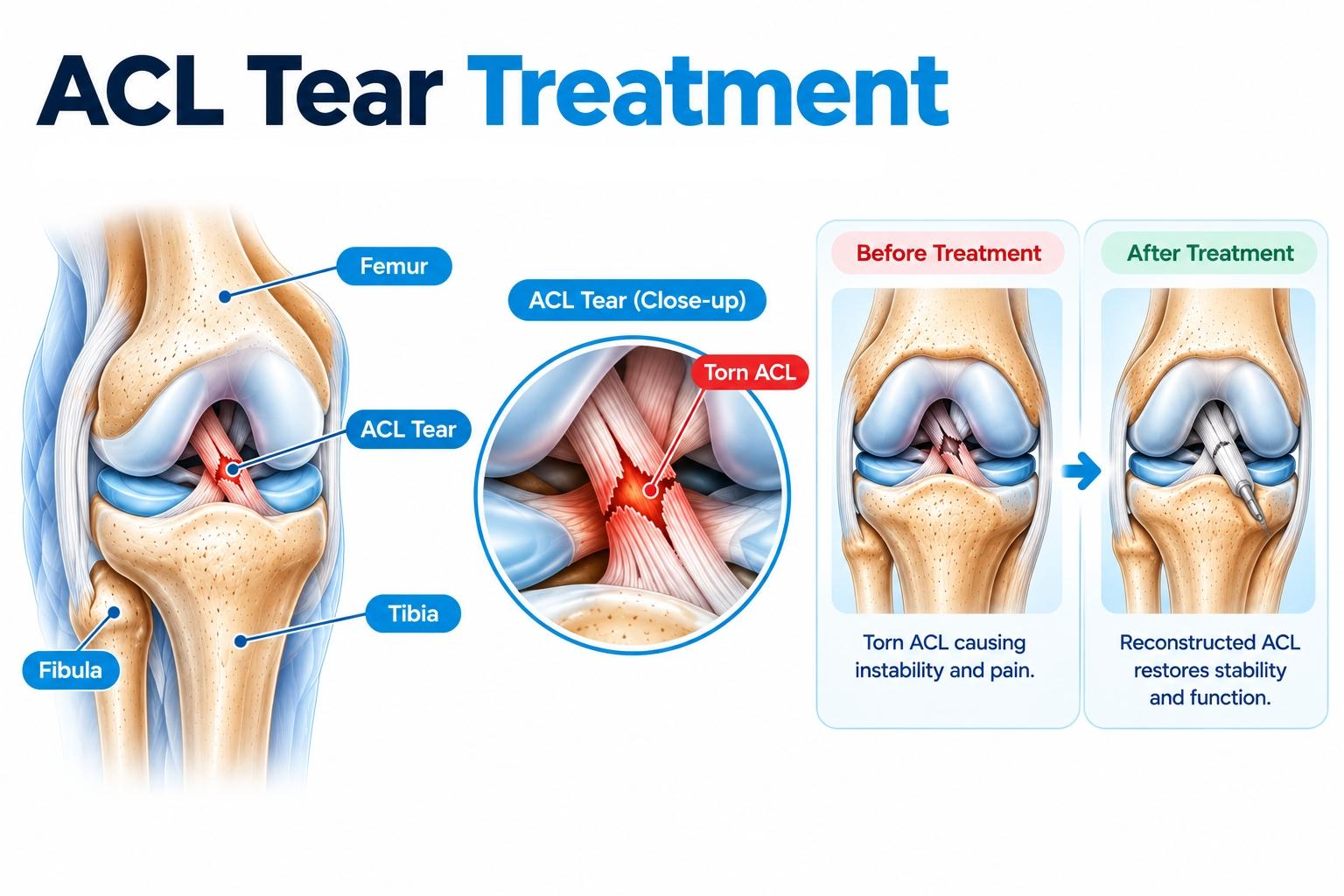
The anterior cruciate ligament (ACL) is an important structure within the knee that helps stabilize the joint during movement. It supports knee control and helps keep the shinbone stable when walking, running, landing, or changing direction. When the ligament is overstretched or torn, the knee may become painful, swollen, or unstable.
An ACL injury may be a sprain or a partial or complete tear. Treatment depends on the extent of ligament damage, activity needs, knee stability, and whether structures such as the meniscus or cartilage are also affected.
Common Causes and Symptoms of an ACL Injury
ACL injuries can occur during sports such as football, basketball, or badminton, particularly with a sudden change of direction, awkward landing, or knee twist. A fall or unexpected movement during everyday activities can also place excessive stress on the ligament.
Symptoms may include:
A popping sensation at the time of injury
Swelling that develops within hours
Pain and difficulty bearing weight
Reduced knee movement
A sensation that the knee may buckle
Difficulty changing direction or walking confidently
An orthopedic specialist can assess knee symptoms after an injury and discuss suitable care.
Types of ACL Tear Treatment
Treatment depends on the severity of the tear, knee stability, and daily and sporting activities. Not all ACL tears require surgery.
Non-Surgical Treatment
For some partial tears or relatively stable knees, care may include rest, cold packs, compression, elevation, temporary activity changes, and medication prescribed by a healthcare professional. Physiotherapy can help improve knee movement, strengthen surrounding muscles, and work on balance and movement patterns.
ACL Reconstruction Surgery
Reconstruction may be considered for a complete tear, repeated episodes of the knee giving way, or activity goals involving pivoting and rapid direction changes. The torn ligament is replaced with a tissue graft, which may come from the patient or a donor. The surgeon assesses the injury and discusses healing, rehabilitation, and possible risks before a treatment decision is made.
Rehabilitation After Treatment
Rehabilitation helps rebuild strength, mobility, balance, and confidence in the knee. Follow the physiotherapist’s guidance and return to activity gradually. Returning to high-intensity sports before recovery may increase the risk of reinjury. Return-to-sport decisions should consider clinical assessment, functional progress, and strength testing—not time alone.
ACL Tear Treatment Cost in India
Treatment costs depend in part on whether the injury can be managed without surgery or requires ACL reconstruction. The treatment plan and rehabilitation needs can also affect the total cost.
Factors That May Affect the Cost
Severity and complexity of the ligament injury
Surgeon consultation and professional fees
Hospital facilities and admission requirements
Surgical technique and graft selected
Diagnostic investigations, including MRI scans
Medicines, follow-up visits, and physiotherapy
Request a detailed estimate that includes the procedure, hospital facilities, and post-treatment rehabilitation. Comparing the services included can help clarify the expected costs.
What Determines ACL Injury Treatment Cost?
The overall expense depends on injury severity, the recommended treatment, and the medical support needed during recovery. Non-surgical care may involve repeat visits, prescribed equipment, medication, and physiotherapy, while surgery may add hospital and operating-room charges.
Associated meniscus or cartilage injuries, additional physiotherapy, and follow-up care may also affect costs. Ask the treating specialist for an estimate based on your diagnosis and clarify which services are included.
How VR Healthy Can Help You Explore ACL Treatment
Finding an appropriate consultant is an important step in ACL care. VR Healthy helps patients explore healthcare information and connect with specialists who can assess symptoms and explain treatment options.
Patients can ask about physiotherapy and surgical care, consultations, investigations, hospital facilities, and post-operative planning. When comparing providers, consider the specialist, facility, rehabilitation team, and the proposed plan—not cost alone.
Frequently Asked Questions About ACL Tears
Some partial tears and injuries without significant knee instability may be managed with physiotherapy and activity changes. Complete tears with ongoing instability need assessment by an orthopedic specialist.
Recovery depends on the injury and treatment. Rehabilitation may take several months, and returning to demanding sports after reconstruction can take 9–12 months or longer. Progress should be guided by clinical assessment and functional testing.
No. Some people can manage symptoms with a supervised rehabilitation plan. Surgery may be considered for ongoing instability or particular activity demands.
The surgeon, hospital, graft, diagnostic tests, associated injuries, and physiotherapy can all affect the total cost. Ask for an estimate based on your diagnosis and treatment plan.
Consult an orthopedic specialist, compare recommended treatment plans, and ask about available rehabilitation and follow-up services.
Planning ACL Care
ACL injuries can affect mobility, confidence, and everyday activities. A specialist-guided treatment and rehabilitation plan can support recovery. Understanding treatment choices, recovery needs, and costs can help patients discuss options with their healthcare team.