Nuclear Cataract
A nuclear cataract forms in the very center of the eye's natural lens. It can slowly make it harder to see things that are far away and might also change the way colors look.

Pioneering Healthcare Assistance Across India
Cataract eye surgery in India is a treatment used to improve vision that has been affected by cataracts. It helps bring clear sight for daily activities. The procedure removes the natural lens of the eye and replaces it with an artificial intraocular lens or IOL. The type of IOL used depends on the patient’s eye condition and vision goals. Knowing the cataract eye surgery cost in India can help patients plan their treatment better. At VR Healthy, patients can learn about cataract eye surgery options, talk to eye care doctors, and understand what to expect during the process. After the surgery, proper cataract eye surgery aftercare is essential. It supports healing. Helps keep good vision for a long time.
Get Assistance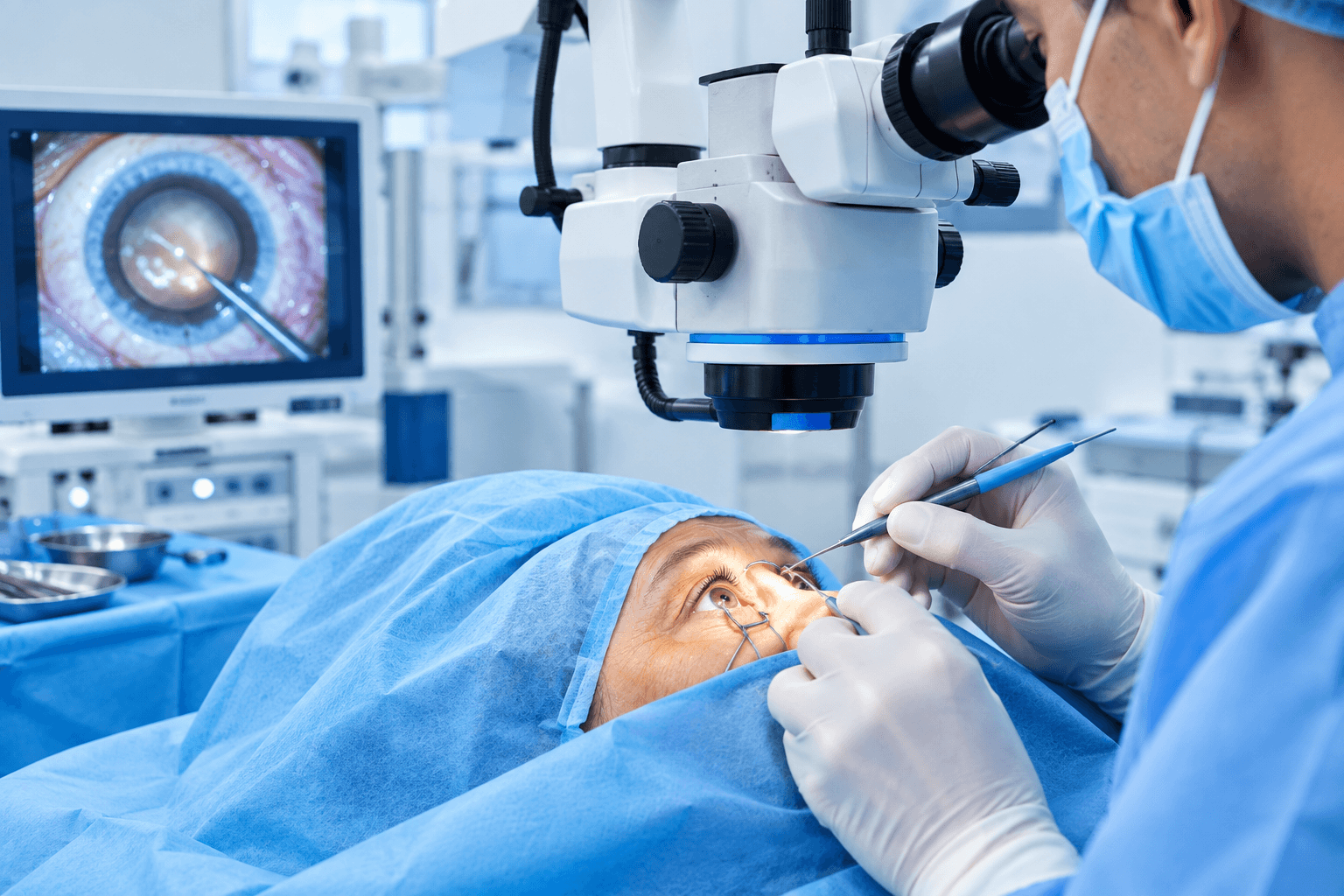
NABH-accredited hospitals
Highly Expert Surgeons
Happy Patients
Cities
The cataract eye surgery is an operation when the cloudy natural lens of the eye is extracted and replaced with a clear artificial intraocular lens. Nowadays, modern cataract eye surgeries are carried out using the technique of micro-incisional phacoemulsification, which involves breaking the cloudy lens into small pieces and removing it using ultrasonic energy.
Most modern cataract eye surgeries do not require a postoperative stay in the hospital.
Cataracts can form in parts of the natural lens inside the eye. The place where the clouding happens and the way it spreads can affect the symptoms that a person feels.
A nuclear cataract forms in the very center of the eye's natural lens. It can slowly make it harder to see things that are far away and might also change the way colors look.
A cortical cataract forms in the outer part of the lens. It can create areas that look like wedges or spokes and might slowly move toward the middle of the lens.
A posterior subcapsular cataract forms at the back part of the natural lens. It can make it harder to see in bright light and might cause problems with reading or doing close work.
Congenital cataracts are present when a baby is born or develop during the first few years of life. They can be linked to some infections or other problems that affect how the body grows and works.
A secondary cataract can happen because of some health problems, medicines, or past eye surgeries. Diabetes and using corticosteroids for a time are some of the things that can increase the chance of getting this type.
If the lens cloudiness negatively impacts your ability to see things properly, you might need to undergo surgery. In this case, symptoms of cataract may include the following:
The diagnosis of cataracts helps determine the severity of the disease and the necessity of surgery.
The natural eye lens tends to become cloudy with time. The following are some possible causes of cataract development.
With age, proteins in the natural lens can start breaking down to form clouds in the eyes.
Past trauma to the eye can lead to the formation of a cataract.
If you have relatives with cataracts, there is a likelihood that you will also get the eye problem.
Certain health problems like diabetes increase the risk of the eye lens changing and forming cataracts.
UV radiation may cause damage to the eye's lens, hence causing cataracts.
Long-term use of certain medicines like corticosteroids may increase the risk of cataract development.
Cataracts are likely to be slow in their development, hence causing gradual changes to vision. When you have cataracts, you can find it challenging to read, drive or recognize people.
Common indicators include:
Blurring of vision: Objects might appear hazy, and therefore, it is hard to do things like reading.
Glare and halos: Bright lights like headlights and street lights might result in the appearance of halos.
Changes in color perception: Colors might start appearing yellow and not bright anymore.
Frequent need to replace glasses: Even when you change spectacles, vision will continue changing.
Double vision in one eye: You may experience overlapping or double vision in one eye.
Increased sensitivity to light: Bright surroundings might become a challenge.
Reduced contrast: You might find it difficult to distinguish objects against their backgrounds, especially when it is dimly lit.
The comprehensive eye examination should be carried out before the surgery. Using the method of biometry, the ophthalmologist is able to calculate the necessary power of the intraocular lens taking into account the eye measurements of the patient.
During the surgery, the patient's eyes are numbed with special drops. Most of the patients do not require general anaesthesia during the procedure.
Through very small corneal incisions, the natural cloudy lens is broken into small pieces and then removed.
Once the extraction of the cloudy lens was completed, a foldable artificial intraocular lens is implanted in the eye. You can choose either monofocal, multifocal or toric intraocular lenses depending on your individual needs.
Modern micro-incisional cataract eye surgeries do not require suturing and lengthy stay in the hospital. You will be able to leave the hospital on the day of your surgery according to your doctor's instructions.
The cataract eye surgery may bring benefits for patients with cataracts that affect the quality of their vision. Possible advantages of the treatment may include:
Your eye condition, selected IOL and other factors determine the visual outcome.
Proper cataract eye surgery after care is important for comfortable healing and a smooth visual recovery. It is important to provide aftercare of the cataract eye surgery to have a comfortable healing process and good visual recovery.Proper cataract eye surgery after care is important for comfortable healing and a smooth visual recovery. Your ophthalmologist may prescribe you some eye drops that should be used for weeks after the procedure.
Patients should avoid rubbing or squeezing their eye that had surgery. Should follow the recommendations of their ophthalmologist about water getting into the eye exercising, driving, etc. The existing VR Healthy guidelines suggest avoiding splashing water into the eye for around 10 days and using the prescribed eye drops for 3-4 weeks.
Regular follow-ups also help your doctor to monitor your healing process and visual functions.
The cost of cataract eye surgery in India may depend on several factors, including the type of IOL chosen, the surgery technology used, the hospital or eye center, the ophthalmologist's experience, and the individual eye condition of the patient.
Factors that may affect the cost
Costs of multifocal and toric lenses are also different.
It is necessary to undergo an eye examination and discuss your case with the ophthalmologist before choosing the treatment and lens.
Modern cataract surgery is a popular operation among ophthalmic surgeries but like any other surgery it has certain risks and possible complications. Your ophthalmologist will assess the state of your eyes , discuss with you the expected benefits and possible risks and suggest the treatment plan.
Your ophthalmologist can also explain the required cataract eye surgery after care and precautions to follow after the procedure. If you have blurring or cloudy vision and it interferes with your life it is time for you to undergo an eye examination and decide whether you need cataract treatment. A specialist will help you assess the cataract discuss the types of IOLs explain the procedure and the recovery process and provide you with an estimate of cataract eye surgery cost in India.
At VR Healthy patients may get assistance, in choosing the most appropriate cataract treatment and connect with ophthalmologists.

Specialized in Cataract, Cornea, LASIK, and Refractive Surgery.
MBBS – Maharashtra University of Health Sciences
Ophthalmologist/ Eye Surgeon
MBBS – Kasturba Medical College

Cataract Surgery, Lasik for Glasses Removal, LASIK Eye Surgery
MBBS – Manipal Academy of Higher Education