
1. Initial Consultation and Assessment
A fertility specialist reviews medical history, menstrual cycles, and reproductive goals. Hormone tests and ultrasound scans may be used to assess ovarian reserve and plan care.
Egg freezing, also called oocyte cryopreservation, involves retrieving and storing suitable eggs for possible future use. It may be considered for personal or medical reasons after an individualized fertility assessment.
VR Healthy helps patients learn about fertility preservation and connect with healthcare professionals to discuss the procedure, storage, and costs.
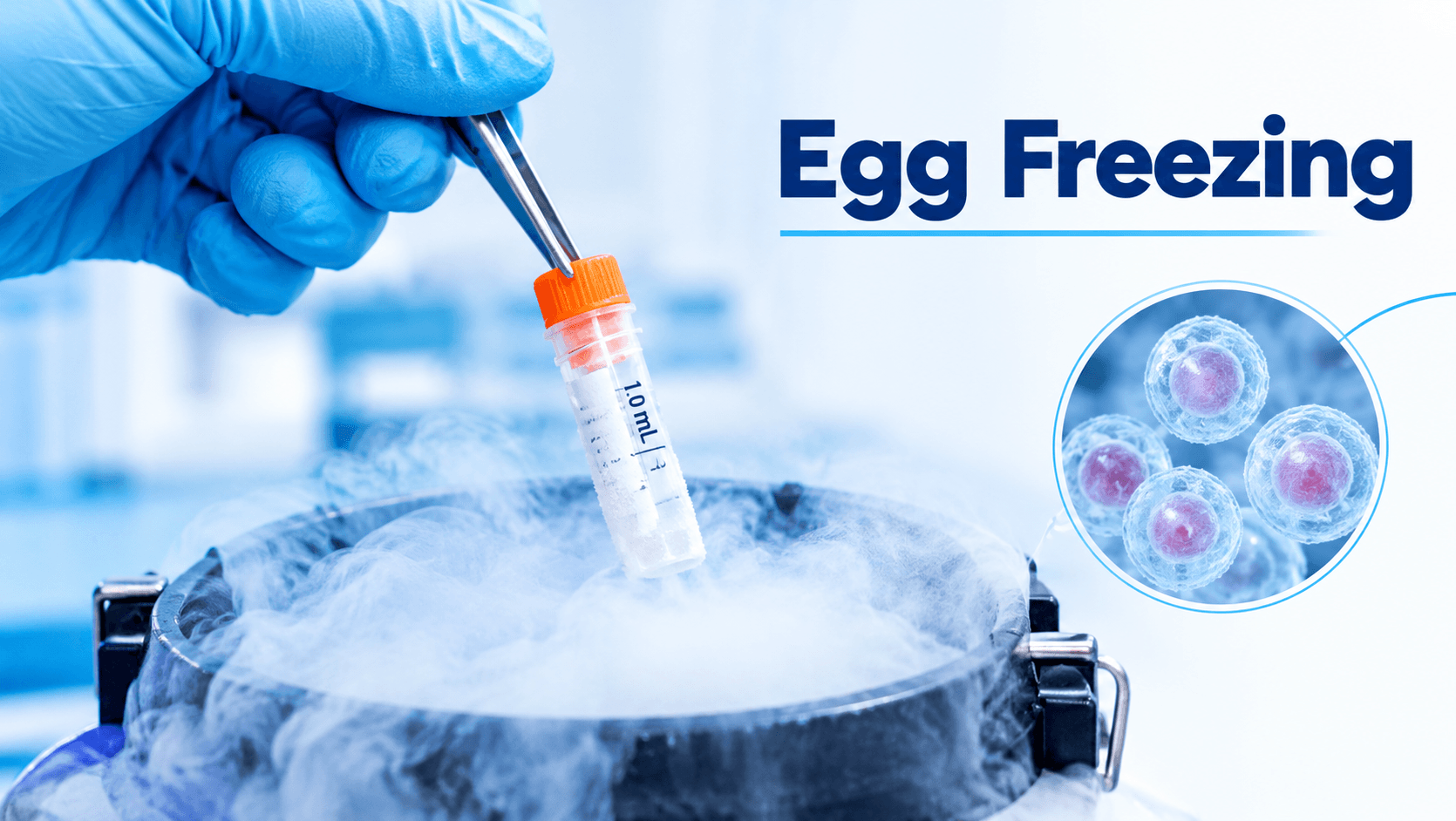
Egg freezing, also called oocyte cryopreservation, is a fertility-preservation process in which eggs are retrieved from the ovaries and stored at very low temperatures for possible future use. If a person later decides to use the eggs, they are thawed and fertilised in a laboratory as part of fertility treatment.
Although often called egg-freezing surgery, the process generally involves medication, monitoring, and an egg retrieval procedure rather than an abdominal operation. Suitability depends on individual health, ovarian reserve, age, and reproductive goals. Egg freezing does not guarantee a future pregnancy.
People may discuss fertility preservation for personal or medical reasons, including:
A fertility specialist can explain possible outcomes, risks, limitations, and alternatives based on the individual’s circumstances.
A fertility specialist reviews medical history, menstrual cycles, and reproductive goals. Hormone tests and ultrasound scans may be used to assess ovarian reserve and plan care.
Medication may be prescribed to stimulate the ovaries to develop multiple eggs. The response is monitored with ultrasound scans and, when indicated, blood tests.
When the eggs are ready, they are collected in a clinical procedure, usually with sedation. The specialist uses ultrasound guidance; an abdominal incision is generally not required.
The laboratory assesses the retrieved eggs. Suitable mature eggs may be frozen using vitrification and stored under appropriate conditions for possible future use.
If a person decides to use the eggs later, they are thawed and fertilised in a laboratory. Any resulting embryos may be considered for transfer as part of IVF, based on clinical advice.
The cost depends on the clinic and location, investigations, medication, retrieval, laboratory work, and storage. Additional tests or more than one stimulation and retrieval cycle may affect the total.
Compare written estimates and confirm what is included in the initial treatment and any ongoing storage fees. The future use of frozen eggs may involve separate charges for thawing, fertilisation, embryo culture, and transfer.
A fertility specialist can help explain how these considerations relate to your goals and circumstances.
VR Healthy provides fertility information to help patients prepare questions and discuss available care options with their clinical team.
Egg freezing, also called oocyte cryopreservation, involves stimulating the ovaries, retrieving eggs, and freezing suitable mature eggs for possible future use. Egg retrieval is a clinical procedure and is not typically abdominal surgery.
Egg freezing may be one fertility-preservation option for people considering future family-building or facing certain medical treatments. Discuss the process, suitability, limitations, storage arrangements, and costs with a qualified fertility specialist. Frozen eggs do not guarantee a future pregnancy.
This page is for educational purposes and is not a substitute for individualized medical advice.