
Fresh Embryo Transfer
A fresh transfer takes place in the same treatment cycle in which eggs are retrieved and fertilised, when the clinical team considers it appropriate.
Embryo transfer (ET) is a step in in vitro fertilisation (IVF), in which a selected embryo is placed in the uterus using a thin catheter. The procedure and timing depend on the treatment plan and individual clinical circumstances.
VR Healthy helps patients explore fertility care information and connect with specialists to discuss embryo transfer options, preparation, and costs.
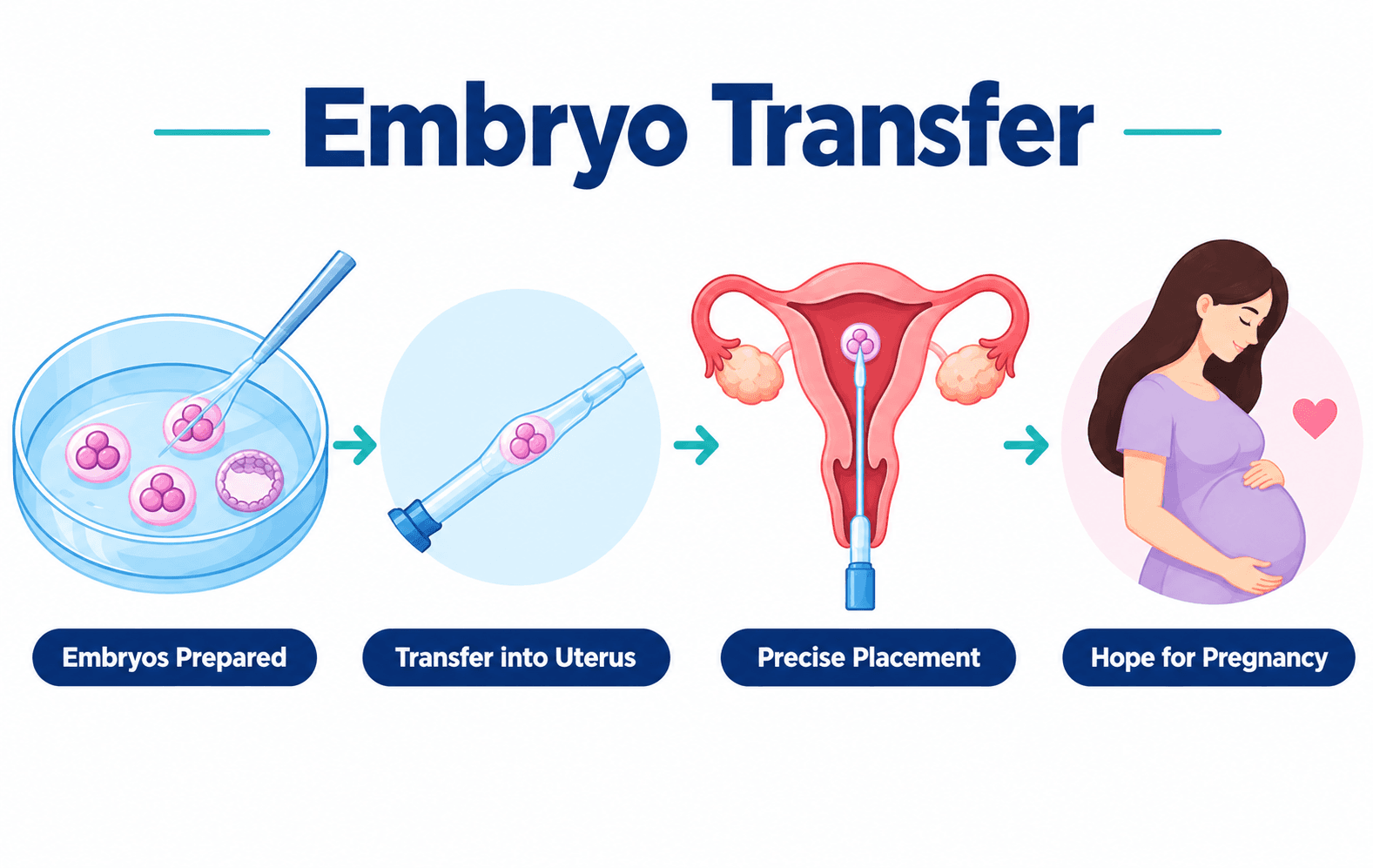
Embryo transfer (ET) is a step in in vitro fertilisation (IVF). After eggs are fertilised with sperm in a laboratory and embryos are monitored, a selected embryo may be placed in the uterus using a thin, flexible catheter. The fertility specialist plans the procedure according to the patient’s treatment and clinical circumstances.
The aim is to give the embryo an opportunity to implant in the uterine lining, but implantation and pregnancy are not assured. Outcomes vary between patients.
Embryo transfer is usually part of IVF and may be planned when the embryo has reached a suitable stage and the specialist considers transfer appropriate. Depending on individual circumstances, the clinic may discuss:
A fresh transfer takes place in the same treatment cycle in which eggs are retrieved and fertilised, when the clinical team considers it appropriate.
A previously frozen embryo is thawed and transferred in a later cycle. The timing and preparation plan depend on the patient’s circumstances and clinic protocol.
An embryo that has developed for several days may be considered for transfer at the blastocyst stage, if appropriate for the treatment plan.
Embryo development, uterine lining, hormone levels, and medical history may all inform the timing and type of transfer. A fertility specialist can explain which approach applies.
During IVF, eggs are fertilised with sperm in a laboratory. The embryology team monitors embryo development and discusses which embryos may be suitable for transfer.
The fertility team assesses the uterine lining and plans timing. Medication may be prescribed to support the lining, depending on whether a fresh or frozen transfer is planned.
The specialist and embryology team plan the embryo transfer with the patient. The number of embryos transferred is based on clinical guidance and individual circumstances.
A specialist guides a thin catheter through the cervix to place the embryo in the uterus. The procedure is usually brief and typically does not require general anaesthesia.
The clinic provides instructions about medicines, activities, and follow-up, including when to take a pregnancy test. Continue prescribed medicines unless the treating clinician advises otherwise.
The transfer procedure is usually short, but the complete IVF treatment involves assessment, laboratory work, and clinic visits before and after transfer.
Depending on the care plan, treatment may involve:
Discuss embryo selection, the number of embryos to transfer, alternatives, potential benefits and risks, and follow-up with your fertility specialist.
Transfer outcomes vary and may be influenced by several clinical factors, including:
Your fertility specialist can discuss which factors may apply to your circumstances and what can and cannot be predicted from an individual treatment plan.
The cost varies by fertility centre, treatment protocol, and services required. Fresh and frozen embryo transfers may have different costs.
Request a written, itemized estimate and ask which services may be charged separately. Confirm whether laboratory services, medication, embryo freezing and storage, thawing, and follow-up are included.
A fresh transfer may take place in the cycle when eggs are retrieved. A frozen embryo transfer uses an embryo stored from an earlier cycle. Frozen transfer costs may include freezing, storage, thawing, and preparation for a later cycle, while fresh transfer costs may include cycle-specific monitoring and medication. Actual inclusions vary by clinic and treatment plan.
Compare itemized estimates to understand the cost of the full treatment package, including any follow-up care.
VR Healthy provides fertility care information and helps patients connect with healthcare providers. Patients can prepare questions about IVF, embryo transfer, timing, embryo selection, alternatives, aftercare, and costs.
Discuss your treatment plan with a qualified fertility specialist and request a detailed estimate from the clinic. Your treating team can provide advice tailored to your medical circumstances.
A specialist uses a thin catheter to place an embryo developed during IVF into the uterus. The clinic provides instructions about preparation, aftercare, and when to take a pregnancy test.
Embryo transfer is a step in IVF that involves placing an embryo in the uterus. Learning about the process, possible transfer options, follow-up, and cost factors can help patients prepare questions for a fertility specialist. A qualified clinician can provide individualized guidance, as transfer does not guarantee pregnancy.