
Loading page...
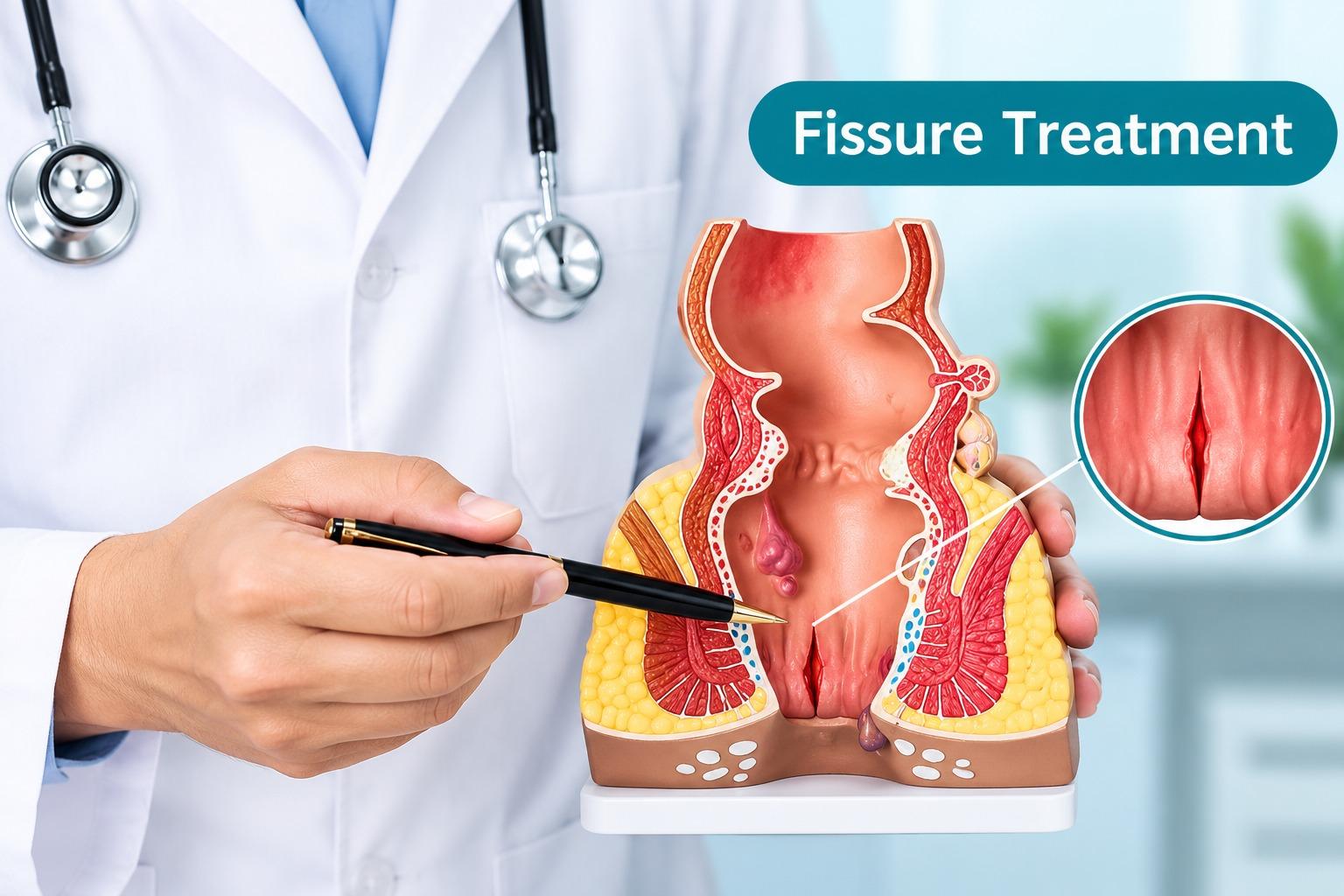
An anal fissure is a small tear or cut in the lining of the anus. Symptoms may include pain when passing stool, a burning or irritated feeling in the anal area, and minor bright-red bleeding. Some fissures may improve with medication, dietary changes, and other nonsurgical options, while others may need assessment by a specialist.
Understanding the available options can help patients discuss appropriate care. Advanced anal fissure treatment in India may include medication or procedures, depending on the duration and severity of symptoms. When surgery is considered, a qualified specialist can explain the procedure, cost factors, and other treatment options.
NABH hospitals
Proctology specialists
Patient consultations
Cities covered
An anal fissure is a small cut or tear in the delicate lining of the anus. It often occurs when the anal lining is subjected to excessive stretching or trauma, such as during the passage of hard or large stools.
Constipation and straining during bowel movements are common contributing factors. Repeated diarrhoea or frequent bowel movements, childbirth, inflammatory bowel disease, reduced blood supply to the anal region, and a history of anorectal conditions may also be associated with anal fissures.
An acute anal fissure may heal within a relatively short period with appropriate management, while a chronic fissure may persist or recur and may require additional treatment.
A healthcare professional can evaluate symptoms and examine the affected area to determine whether an anal fissure is present and whether further treatment is required.
Anything that causes the passage of hard stools, such as constipation, can contribute to an anal fissure. Repeated diarrhoea or frequent bowel movements may also irritate or injure the anal lining.
Other possible contributing factors include childbirth, inflammatory bowel disease, reduced blood supply to the anal region, and a history of anorectal conditions.
Identifying the underlying cause can help a specialist determine an appropriate treatment approach.
In some cases, an anal fissure may not require surgery. A doctor may initially recommend lifestyle and dietary changes such as drinking adequate fluids, increasing dietary fibre, avoiding excessive straining, and using prescribed or recommended medication.
A warm bath may also be suggested to help ease discomfort. The appropriate treatment depends on whether the fissure is acute or chronic and whether symptoms improve with initial management.
If symptoms persist, a specialist may recommend additional treatment options. These may be referred to as advanced anal fissure treatment depending on the patient's condition.
The term "advanced anal fissure treatment in India" may refer to treatment approaches used for persistent or chronic fissures when initial measures do not provide adequate improvement.
Depending on the patient's condition, treatment options may include prescription medication, minimally invasive procedures, or surgery. The appropriate approach is determined after considering the fissure, symptoms, medical history, and overall health.
Patients should not select a treatment simply because it sounds more advanced. A qualified specialist can explain the potential benefits, limitations, risks, and expected recovery associated with the available options.
Surgical treatment may be recommended when an anal fissure persists, recurs, or does not improve with conservative treatment.
The appropriate procedure depends on the individual patient's condition. Before surgery, the specialist should evaluate the fissure and explain the expected treatment process, potential risks, and recovery.
Patients considering surgery may also want to understand the anal fissure surgery cost. The cost can vary depending on the procedure, location, surgeon's experience, diagnostic tests, healthcare facility, and other treatment requirements.
The overall anal fissure surgery cost may vary depending on several factors related to the procedure and the patient's treatment plan.
Patients are advised to request a clear estimate of the anal fissure surgery cost before treatment. This can help them understand what is included and whether additional charges may apply.
Selecting an experienced specialist is an important part of anal fissure treatment. Patients looking for a fissure surgery specialist in India should consider experience, relevant expertise, treatment approach, hospital facilities, and post-treatment care.
Consulting a qualified specialist can help patients understand whether surgery is appropriate or whether a nonsurgical treatment may be considered.
Patients may also ask about the recommended procedure, expected recovery time, potential complications, and follow-up requirements.
The appropriate specialist can help determine whether advanced anal fissure treatment or surgery is suitable based on the patient's condition.
Recovery depends on whether the fissure is managed with nonsurgical treatment or a procedure, as well as the patient's overall health and individual circumstances.
After treatment, patients may receive instructions related to medicines, diet, bowel movements, physical activity, and hygiene.
Adequate hydration and sufficient dietary fibre can help support regular bowel movements, although individual recommendations should be followed according to the treating doctor's advice.
Follow-up appointments may be recommended to monitor healing and manage any continuing symptoms.
VR Healthy helps patients explore healthcare services and connect with suitable doctors for their healthcare needs. Patients can use the platform to understand anal fissure treatment options, learn about factors that may affect the anal fissure surgery cost, and explore information about advanced treatment approaches.
Patients considering treatment can also discuss their symptoms, diagnosis, treatment options, recovery, and follow-up requirements with a qualified specialist.
An anal fissure is a small tear in the lining of the anal canal that can cause pain and bleeding. Some anal fissures may heal with appropriate conservative management, while persistent or chronic fissures may require specialist evaluation and additional treatment.
Advanced anal fissure treatment in India may include medication, minimally invasive procedures, or surgery depending on the patient's condition. The anal fissure surgery cost can vary according to the procedure, healthcare facility, specialist, diagnostic requirements, and other treatment factors.
Patients with persistent anal pain or bleeding should consult a qualified healthcare professional for an appropriate diagnosis and treatment plan rather than choosing treatment based only on cost.
What Is an Anal Fissure? An anal fissure is a small tear or cut in the lining of the anus. Symptoms may include pain during bowel movements, a burning or irritated feeling around the anal area, and minor bright-red bleeding.
Some anal fissures may improve with medications, diet changes, and other conservative measures. Persistent or chronic fissures may require specialist review and additional treatment depending on the patient's condition.
The specialist reviews symptoms, bowel habits, medical history, and the affected area before recommending treatment.
A healthcare professional examines the fissure and decides if further investigation or treatment is required.
Care may include medication, lifestyle changes, minimally invasive procedures, or surgery based on the patient's condition.
Recovery depends on whether the fissure is managed with conservative treatment or a procedure. Follow-up advice and bowel habit guidance may be recommended by the treating doctor.