
Total Hip Replacement
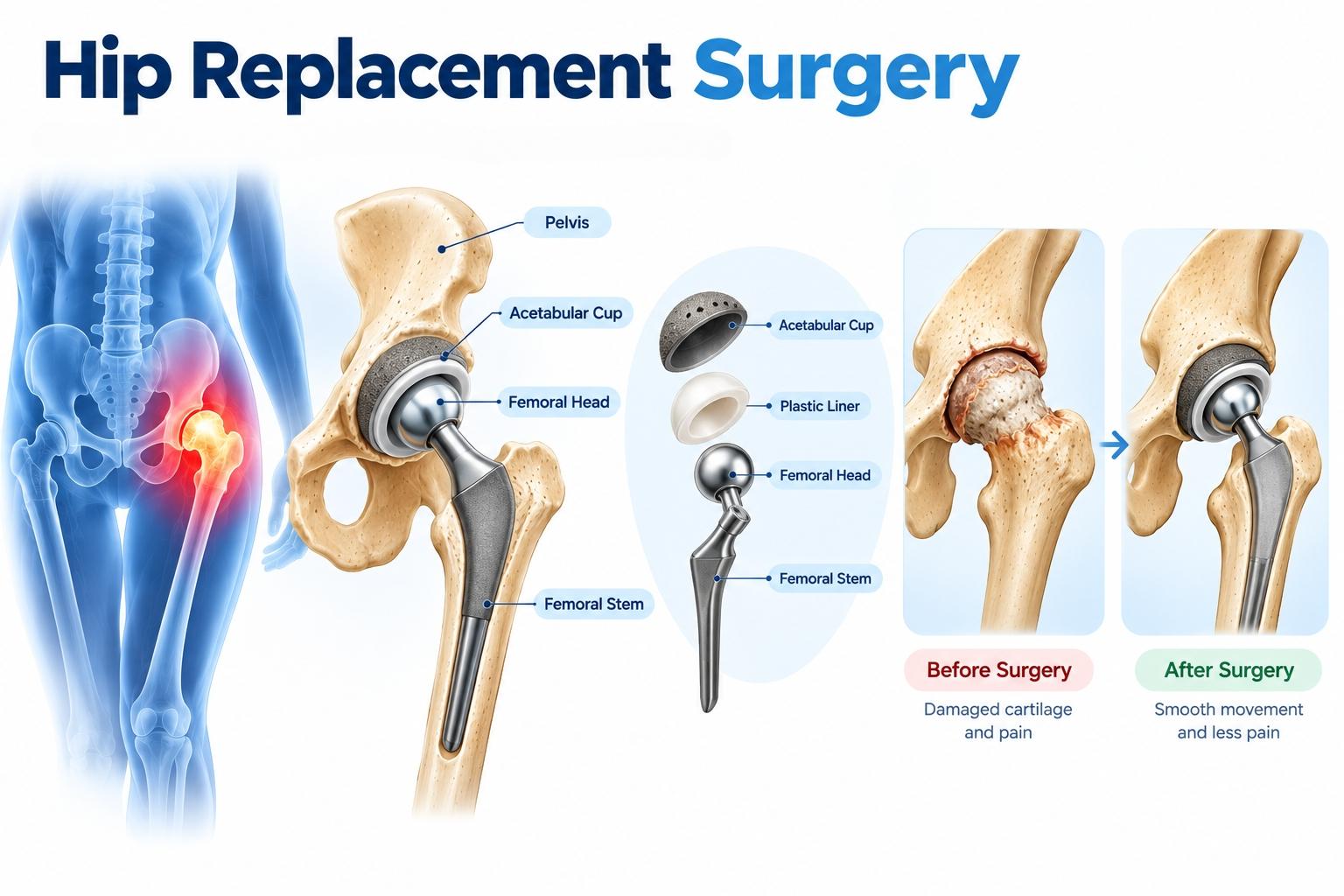
The damaged ball at the top of the thighbone and the hip socket are replaced with artificial components. It may be considered for advanced arthritis or significant joint damage.
Hip pain and stiffness can make everyday activities such as walking, climbing stairs, sitting, and standing more difficult. If joint damage is advanced or other treatments have not provided enough relief, a specialist may discuss hip replacement as an option.
Hip replacement is intended to address joint pain and mobility limitations. VR Healthy helps patients learn about treatment options and connect with healthcare providers.
NABH-accredited hospitals
Highly Expert Surgeons
Happy Patients
Cities
Hip replacement is an orthopedic operation in which damaged parts of the hip joint are replaced with artificial components. It may be recommended for people with severe joint damage related to osteoarthritis, rheumatoid arthritis, or certain hip fractures.
The hip is a ball-and-socket joint that allows the leg to move in several directions. When cartilage wears down or the joint is damaged, movement can become painful and restricted. Replacing the affected parts may help relieve discomfort and improve mobility.
An orthopedic surgeon will assess whether hip replacement may be appropriate based on symptoms, joint damage, overall health, and response to other treatments. Signs that may prompt an assessment include:
The specialist may recommend an examination, X-rays, or other tests before discussing treatment options.
The approach depends on the extent of joint damage and the patient’s health.
The damaged ball at the top of the thighbone and the hip socket are replaced with artificial components. It may be considered for advanced arthritis or significant joint damage.
The damaged ball-shaped part of the joint is replaced while the natural socket remains. It may be considered for some types of hip fracture.
Some approaches use smaller incisions and aim to limit disruption to surrounding tissue. Suitability depends on the patient’s anatomy, health, and the surgeon’s assessment.
Discuss the possible benefits, risks, and limitations of each option with the treating surgeon.
The cost may depend on the surgical approach, hospital facilities, implant type, and the patient’s medical needs. The surgeon’s fee, investigations, medicines, and length of admission may also affect the final estimate.
Request an itemized estimate and confirm whether it includes the implant, medicines, hospital stay, post-operative physiotherapy, and follow-up visits. Other health conditions may add to the cost, so an estimate should be based on an individual assessment.
Costs can vary between cities and hospitals, and with the type of surgery, implant material, and general health of the patient. An overall estimate should account for investigations, hospital admission, physiotherapy, and follow-up care as well as the operation.
Ask the treating hospital for a complete estimate based on the recommended approach. Check whether the procedure is covered by your health insurance and what documents are needed for cashless treatment or reimbursement.
Recovery varies from person to person. Depending on the patient’s condition and the surgeon’s instructions, a healthcare professional may help them stand or walk with support soon after surgery.
Physiotherapy can support strength, balance, and joint movement. A walker or cane may be needed until strength improves, and walking may be increased gradually when advised. Follow wound-care instructions and attend scheduled check-ups.
Recovery time depends on age, general health, muscle strength, and participation in rehabilitation. Follow activity restrictions and contact your doctor promptly about new symptoms such as fever, increasing wound redness, new leg swelling, or sudden severe pain.
VR Healthy helps patients explore orthopedic information and connect with healthcare professionals who can guide them through diagnosis, treatment options, and recovery.
Patients can discuss the procedure, implants, post-surgical care, and expected costs with their surgeon. Whether you are researching hip replacement surgery costs in India or learning about the procedure, you can contact VR Healthy to take the next step toward a consultation.
Ongoing pain, stiffness, or limited movement may warrant an orthopedic assessment. A doctor considers the extent of joint damage and whether non-surgical treatments have helped before discussing surgery.
Hip joint problems can affect mobility and daily activities. A specialist assessment can help clarify treatment options, rehabilitation needs, and expected costs so patients can make informed decisions with their healthcare team.