
1. Initial Consultation and Fertility Assessment
The specialist reviews medical history, previous fertility care, and reproductive health. Tests may assess ovarian reserve, hormone levels, the uterus, and sperm.
In vitro fertilisation (IVF) is one of several assisted reproductive options for people experiencing difficulty conceiving. The treatment plan depends on factors such as reproductive health, medical history, and the cause of infertility.
VR Healthy helps patients learn about fertility care and connect with specialists to discuss the process, testing, and costs.
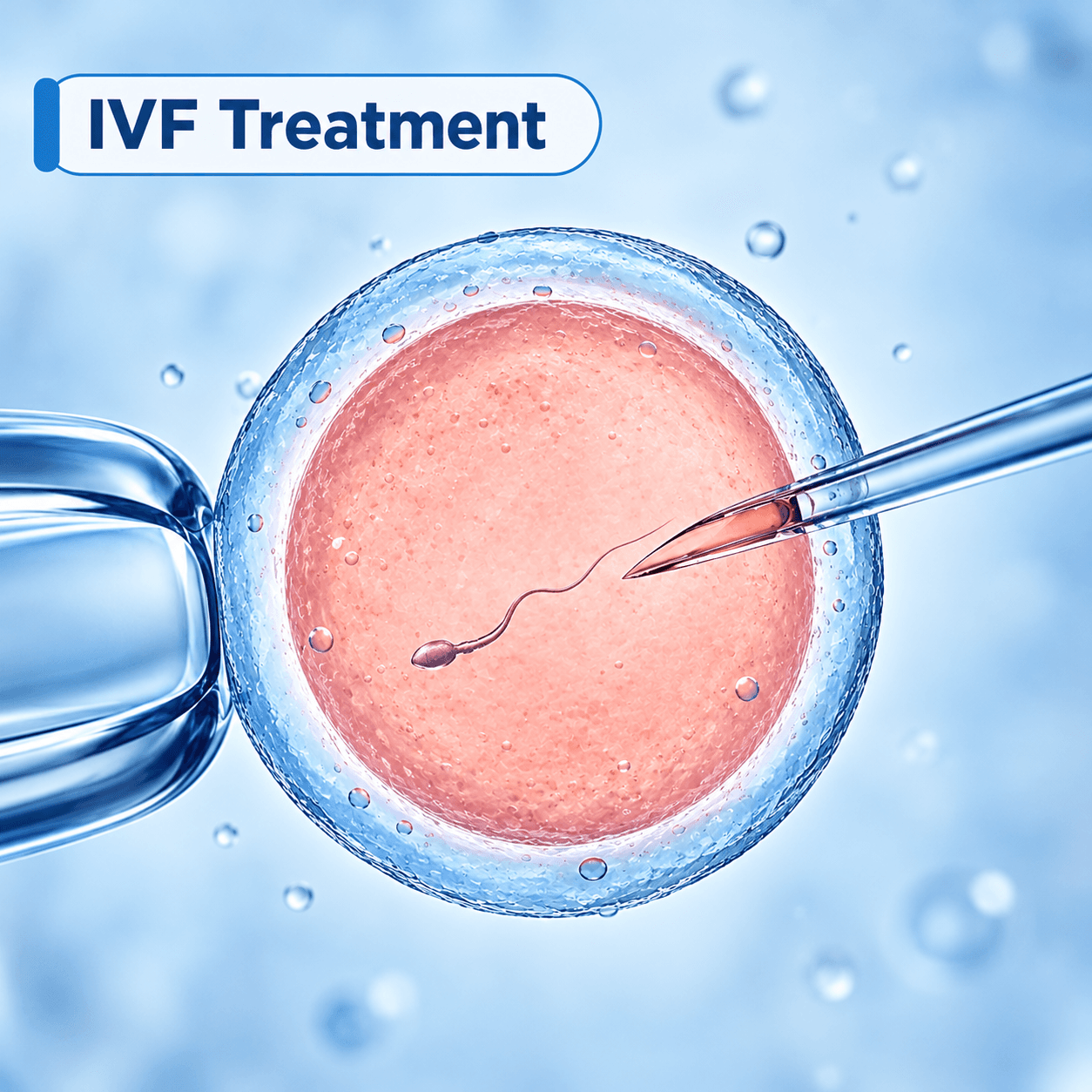
In vitro fertilisation (IVF) is an assisted reproductive treatment in which eggs are collected and fertilised with sperm in a laboratory. An embryo may then be transferred to the uterus. The plan is individualized according to factors such as age, reproductive health, medical history, and the cause of infertility.
A fertility specialist can assess both partners where applicable and explain whether IVF may be appropriate, along with its possible risks, limitations, and alternatives.
Depending on the assessment, a fertility specialist may discuss IVF for situations such as:
IVF is not needed by everyone experiencing difficulty conceiving. Medication, other fertility treatments, or further evaluation may also be considered.
The specialist reviews medical history, previous fertility care, and reproductive health. Tests may assess ovarian reserve, hormone levels, the uterus, and sperm.
Medication may be used to help the ovaries develop eggs. The response is monitored with blood tests and ultrasound scans, with the plan tailored to the patient.
Eggs are collected in a clinical procedure, usually with sedation or anaesthesia. The care team explains preparation, possible risks, and aftercare.
Eggs and sperm are brought together in a specialised laboratory. In selected cases, intracytoplasmic sperm injection (ICSI) may be used to inject a sperm into an egg.
Fertilised eggs are monitored as they develop. Not every egg will fertilise or develop into an embryo suitable for transfer, and outcomes vary.
An embryo may be placed in the uterus using a thin catheter. The fertility team will advise on timing and any aftercare.
A pregnancy test is performed on the date advised by the clinic. The specialist discusses the result and any next steps or alternatives.
IVF costs vary by location, clinic, treatment protocol, medicines, laboratory services, and the patient’s fertility needs. Additional procedures or more than one cycle may increase the total.
Request a detailed written estimate and confirm what is covered. Costs may change if additional tests or procedures are recommended.
Additional procedures, donor services where applicable, or multiple treatment cycles may add to the total. An itemized fee schedule can help you compare services included in different estimates.
When comparing providers, consider:
Ask how a clinic measures and reports success rates, and whether the figures are relevant to patients with similar circumstances. No provider can guarantee pregnancy.
VR Healthy provides information about fertility care and helps patients connect with healthcare specialists. Patients can prepare questions about the IVF process, testing, possible risks, timelines, and costs for a consultation.
A clinic can provide a personalized estimate after reviewing your medical history and proposed treatment plan. Discuss your expectations and options with a qualified fertility specialist.
In vitro fertilisation (IVF) is a process in which eggs are collected and fertilised with sperm in a laboratory. An embryo may then be transferred to the uterus. The process and suitability vary by patient.