
Loading page...
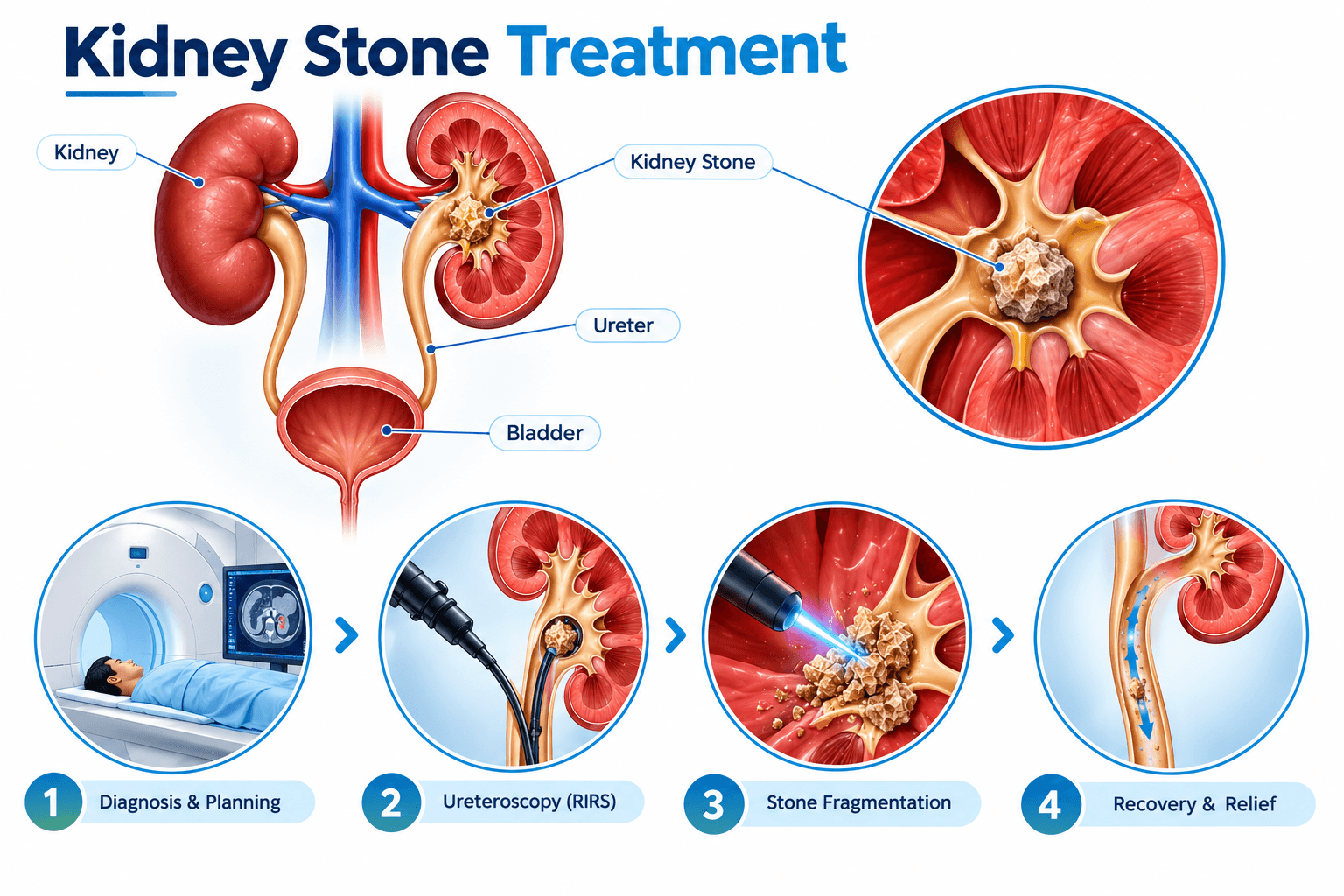
Kidney stones are solid pieces of mineral that can form in the kidneys. They range in size and may cause severe pain, burning during urination, nausea, or blood in the urine. Depending on a stone’s size and location, a specialist may recommend monitoring, medication, or a suitable stone-removal procedure.
Understanding kidney stone treatment options can help you discuss your care with a qualified clinician. Treatment depends on the stone’s size, location, composition, symptoms, and your overall health.
NABH-accredited hospitals
Highly Expert Surgeons
Happy Patients
Cities
A kidney stone is a solid piece of material that forms when minerals and salts in the urine crystallise and stick together. A stone may remain in the kidney or move down the ureter toward the bladder.
Some stones cause no symptoms until they move or block urine flow. Seek medical advice for pain, fever, or urinary problems.
Kidney stones can form when certain substances in urine are present in amounts that allow crystals to develop. Factors that may contribute include:
Risk varies by stone type and individual health. A urologist may recommend blood or urine tests, stone analysis, or imaging to investigate the cause and help guide treatment and prevention.
Management depends on the stone’s size, site, and composition, the patient’s symptoms, and whether there is obstruction or infection. Not everyone needs an operation.
Some small stones may pass with medical supervision. A clinician may recommend pain relief, other medicines, fluids when appropriate, and follow-up imaging.
ESWL uses focused shock waves to break some stones into smaller pieces that may pass through the urinary system. It is not suitable for every stone; size, location, type, and other clinical factors matter.
A thin instrument is passed through the urinary tract to reach the stone. The stone may be removed with a small basket or broken into smaller pieces using a laser or another instrument.
For some larger or more complex stones, a specialist may recommend accessing the kidney through a small incision in the back to remove the stone.
The appropriate kidney stone procedure depends on the individual patient and the stone. An experienced urologist can assess the clinical findings and discuss suitable options.
Consider a urologist’s qualifications, relevant experience, access to diagnostic facilities, hospital standards, and follow-up arrangements.
There is no single best kidney stone surgery for everyone. A personalised recommendation considers the stone’s size, type, location, symptoms, and the patient’s health. A urologist can explain the options and why a particular approach may be appropriate.
Kidney stone treatment cost varies according to the care required and the patient’s condition. Observation or medication will differ in cost from a minimally invasive procedure or surgery. Factors may include:
Request a clear estimate before treatment and confirm which services it includes. A detailed estimate can be prepared after reviewing diagnostic results and the recommended plan. When comparing providers, consider clinical suitability, experience, and quality of care—not cost alone.
Recovery varies with the treatment and the patient’s health. Follow your urologist’s instructions about medicines, activity, fluid intake, follow-up visits, and symptoms that need attention.
Prevention may include appropriate fluid intake, dietary measures, and management of conditions that contribute to stone formation. Advice depends on the stone type and the individual patient. Ask your specialist what to expect after treatment and how to lower the chance of recurrence.
Seek medical advice for persistent side or back pain, blood in the urine, recurring urinary symptoms, or difficulty urinating. If you have severe pain with fever or chills, persistent vomiting, or cannot urinate, seek urgent medical care.
An assessment can help identify the cause of symptoms and whether monitoring, medication, or a procedure may be appropriate.
VR Healthy helps patients explore care options and prepare questions for a urology consultation. If you have been diagnosed with kidney stones, discuss your symptoms and test results with a urologist. Ask about treatment choices, cost, recovery, and follow-up care.
A specialist consultation is important when deciding which treatment, if any, is appropriate for your circumstances.
Kidney stones range in size and may pass on their own or require a procedure. A qualified urologist can assess the stone and the patient’s overall health, explain appropriate options, and advise on recovery and prevention.
Some smaller stones may pass without a procedure, but this depends on the stone and the patient. A clinician can advise on monitoring, medicines, and when treatment is needed.