
Loading page...
Limping, difficulty walking, standing, or sitting, swelling, and difficulty climbing stairs can affect everyday life. Persistent knee symptoms should be assessed by a healthcare professional to identify the cause and discuss suitable treatment.
VR Healthy helps patients explore orthopedic care and connect with doctors and hospitals. Learning about knee replacement can help you prepare for a consultation and discuss whether surgery or another treatment may be appropriate.
NABH-accredited hospitals
Highly Expert Surgeons
Happy Patients
Cities
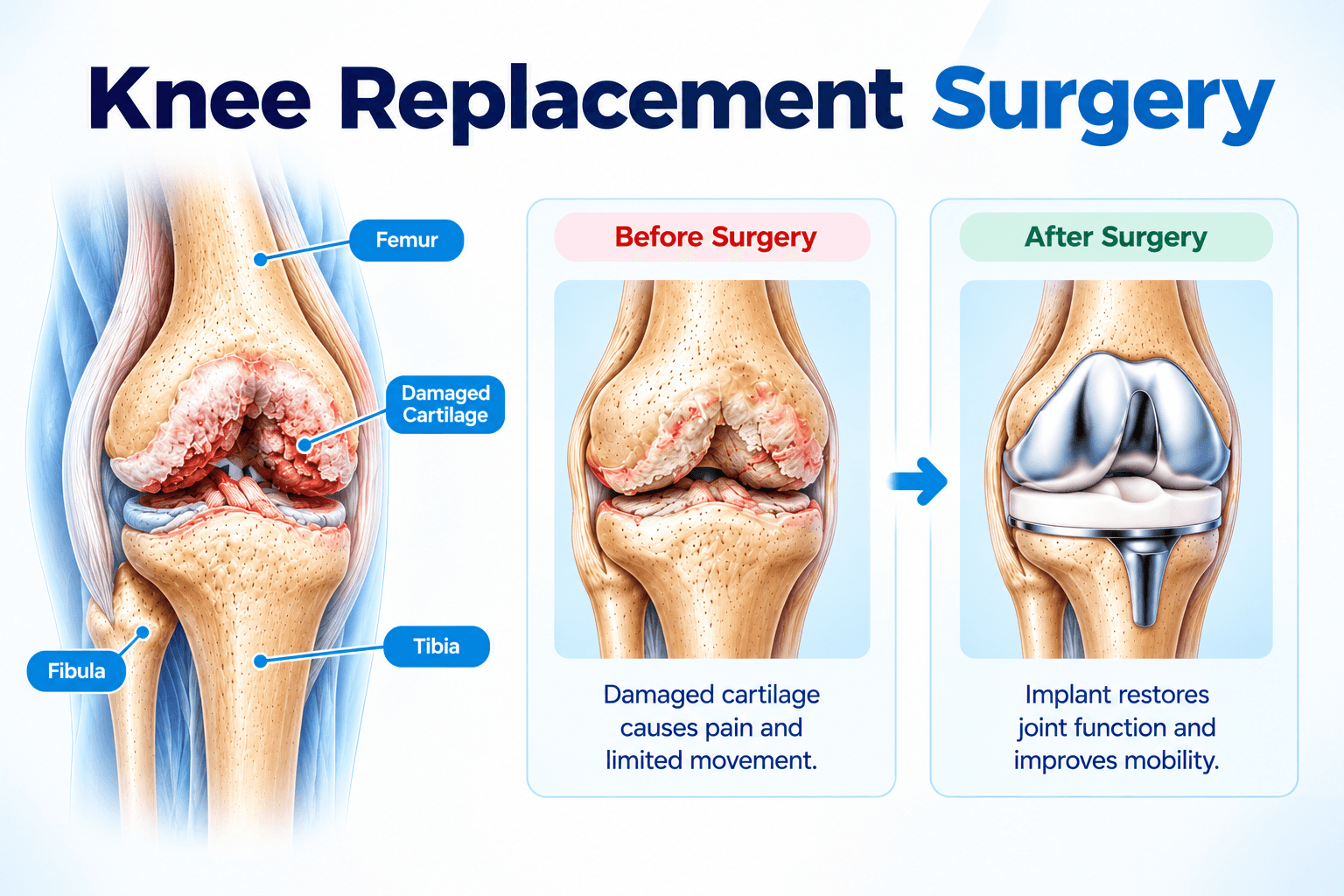
Knee replacement surgery replaces damaged joint surfaces with artificial components designed to support joint movement. It may be considered when pain and limited function remain despite non-surgical care such as medication, injections, or exercise.
The operation may replace the whole knee joint or only the affected part. An orthopedic surgeon makes a recommendation after reviewing symptoms, physical findings, medical history, and test results.
Knee replacement is an operation in which damaged parts of the knee joint are replaced with artificial components. It may be considered when severe joint damage, including damage related to osteoarthritis or other conditions, limits mobility and daily activities.
The goals may include reducing pain and improving movement and function. Whether a total or partial replacement is suitable depends on the pattern and extent of joint damage and the patient’s health.
A specialist may discuss knee replacement when pain and stiffness significantly limit everyday activities and other treatments have not provided enough relief. Factors that may be considered include:
Surgery is not always necessary. A clinician may discuss medication, physiotherapy, weight management, changes to activity, or other options before considering an operation.
The appropriate approach depends on the extent of joint damage, overall health, and the surgeon’s clinical assessment.
Damaged surfaces in the knee joint are replaced with metal and plastic components. It may be considered for some patients with extensive cartilage damage or advanced arthritis.
Only the affected part of the knee is replaced when other parts of the joint are suitable to remain. This may be an option for some patients whose damage is limited to one area.
Both knees are replaced, either during one operation or in separate stages. The treating team considers the patient’s overall health and risks when discussing timing.
A revision may be needed if a previous replacement has loosened, worn out, failed, or developed a complication. It can be more complex and recovery may differ from an initial replacement.
Ask the surgeon to explain the potential benefits, risks, alternatives, and recovery expectations for each suitable option.
Knee replacement surgery cost varies with the procedure, hospital facilities, surgeon’s fees, implant type, and length of stay. Other charges may include diagnostic tests, anaesthesia, medicines, follow-up, and physiotherapy.
Costs can also vary by city, hospital type, treatment package, health needs, and procedure complexity. Bilateral or revision procedures may have different costs from a standard one-knee replacement.
Request an itemised estimate and confirm whether it includes the implant, operating theatre, room, anaesthesia, medicines, physiotherapy, and follow-up. Compare the services and care included, not just the quoted total.
Your healthcare team may advise you to:
Before surgery, ask what outcomes to expect, what risks may apply, and what support may be needed after discharge.
Recovery varies according to the procedure, overall health, and individual progress. Some patients begin standing or walking with assistance soon after surgery, as advised by their care team.
Physiotherapy can help restore movement, build strength around the knee, and support balance. Follow the exercise plan and attend scheduled follow-up appointments. Wound care, medicines, and activity guidance should follow the instructions provided by your healthcare team.
Contact your healthcare provider promptly about concerning symptoms such as fever, increasing redness or discharge around the wound, worsening pain, sudden chest pain, or shortness of breath. For severe or sudden symptoms, seek emergency medical care.
VR Healthy helps patients explore clinics, hospitals, doctors, and information about orthopedic care. Patients can learn about procedures, consultation fees, and hospital charges as they prepare to discuss options with a healthcare provider.
If you are comparing knee replacement surgery costs in India, ask the provider about the hospital package, implant, insurance eligibility, and post-surgery rehabilitation. The treating team can help clarify which services are included in an estimate.
Knee replacement may be considered when knee pain and limited mobility have not improved with non-surgical care. An orthopedic specialist can assess your condition, discuss suitable options, and explain the potential benefits, risks, cost, and recovery plan.