
Conventional Surgery
Depending on the condition, a surgeon may remove the sinus tract and surrounding affected tissue. The appropriate procedure is determined after an individual assessment.
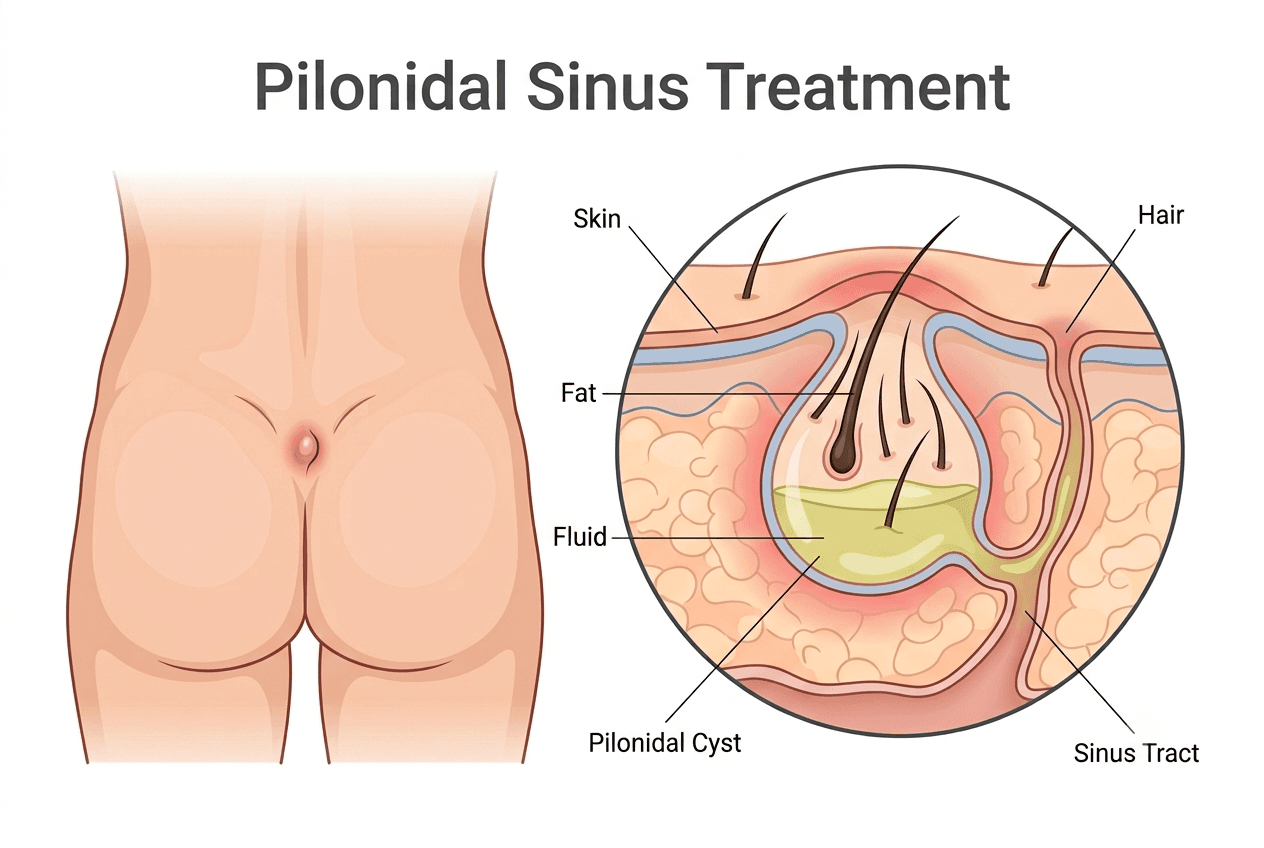
A pilonidal sinus is a small opening or passage in the skin near the tailbone, at the top of the buttocks. It may contain hair, skin debris, or other material. Symptoms can include pain, swelling, redness, or discharge, and infection may lead to an abscess.
A specialist can assess persistent or recurring symptoms and discuss suitable care. Treatment depends on the individual condition and may range from wound care or abscess drainage to a surgical or minimally invasive procedure.
NABH hospitals
Proctology specialists
Patient consultations
Cities covered
A pilonidal sinus is a small opening or tunnel beneath the skin, usually near the tailbone at the top of the buttocks. Hair or skin debris can collect in the area. If it becomes infected, pain, swelling, redness, or discharge may develop, and an abscess can form.
Persistent or recurring pain, swelling, redness, or discharge should be assessed by a healthcare professional.
Surgery is not required in every case. Care depends on the symptoms and clinical findings. An abscess may need to be drained, while recurrent or chronic disease may require a procedure to address the sinus.
Depending on the condition, a surgeon may remove the sinus tract and surrounding affected tissue. The appropriate procedure is determined after an individual assessment.
Selected patients may be considered for approaches that use smaller openings or aim to limit disruption to surrounding tissue. Suitability depends on the sinus and specialist assessment.
Laser treatment may be considered for selected cases as a minimally invasive approach. It is not appropriate for every patient; suitability depends on the sinus characteristics and a specialist’s evaluation. Discuss the available options, potential risks, and follow-up needs with the treating specialist.
The cost varies according to the patient’s condition and the recommended procedure. A treatment estimate can be discussed after clinical evaluation.
Recovery and aftercare depend on the procedure and the individual. Follow the instructions provided by the treating team.
Treatment planning considers the severity and recurrence of symptoms, sinus location and characteristics, overall health, and specialist assessment. Patients can discuss the specialist’s experience, available treatment approaches, facility, follow-up care, and what is included in a cost estimate.
VR Healthy can help patients understand available treatment options, explore specialist consultations, learn about surgical and minimally invasive approaches, and review factors that may affect treatment cost. Patients can use the platform to connect with healthcare providers and discuss care suited to their needs.
Pilonidal sinus is treatable, but the appropriate care depends on the individual condition. Wound care, drainage, surgery, or a minimally invasive approach may be considered after professional assessment. Costs vary according to the recommended procedure and facility.
Seek medical evaluation for persistent pain, swelling, redness, or discharge, and discuss treatment options and follow-up with a qualified healthcare professional.