
Loading page...
Prostate issues can affect urinary function and quality of life. An enlarged prostate, prostatitis, and prostate cancer are different conditions that may require different evaluation and care.
Explore prostate treatment information, connect with doctors, and learn what may affect prostate surgery costs in India. A qualified clinician can assess your individual condition and explain appropriate options.
NABH-accredited hospitals
Highly Expert Surgeons
Happy Patients
Cities
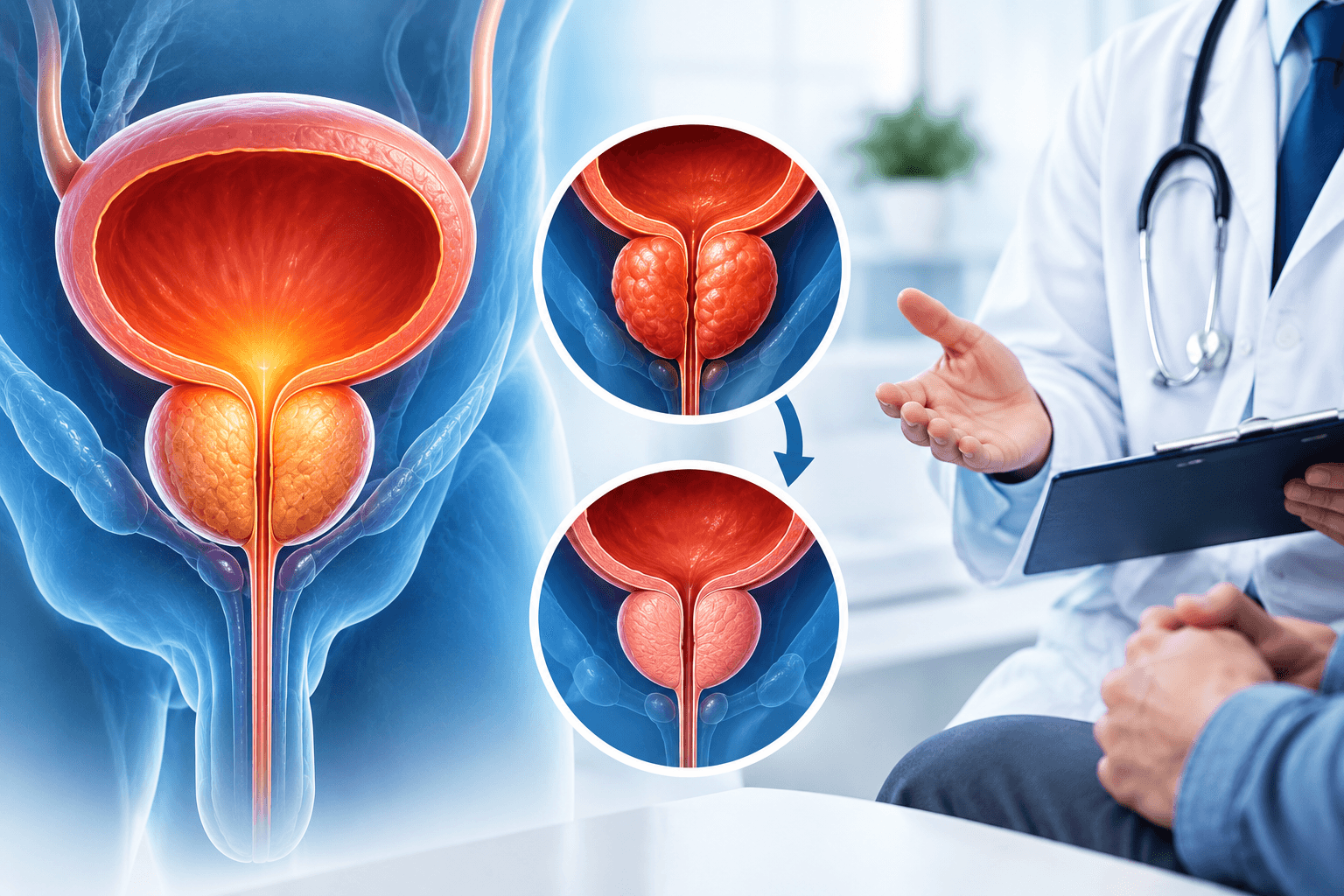
The prostate is a small gland beneath the bladder that surrounds part of the urethra and produces fluid that forms part of semen. Prostate conditions can affect urination and may cause pain or other symptoms.
Treatment depends on the specific condition, its severity, age, symptoms, and overall health. Options may range from medication and regular monitoring to procedures or surgery. A urologist can explain the diagnosis and whether an intervention is needed.
BPH is a non-cancerous enlargement of the prostate. An enlarged prostate can press on the urethra and affect urine flow. Symptoms may include:
Depending on symptoms and assessment, management may include monitoring, medication, or a procedure.
Prostatitis is inflammation of the prostate and may sometimes be related to bacterial infection. It can cause pelvic pain, pain during urination, urinary symptoms, or pain with ejaculation. A clinician can assess the cause and recommend care.
Prostate cancer involves abnormal cell growth in the prostate. Care depends on factors including the cancer’s stage and grade and the patient’s health. A specialist may discuss active surveillance, hormone therapy, surgery, radiation therapy, or other suitable approaches.
Treatment is based on the diagnosis and the patient’s circumstances. Not all prostate conditions require surgery.
For some patients, medicines may help manage urinary symptoms associated with an enlarged prostate. A clinician may recommend monitoring when appropriate, based on symptoms and assessment.
Some procedures can help relieve urinary blockage and symptoms related to an enlarged prostate. The specific option depends on prostate size, symptoms, clinical assessment, and available technology.
Surgery may be considered for severe symptoms, complications, or when other treatments have not helped enough. For some patients with BPH, a procedure such as transurethral resection of the prostate (TURP) or another suitable treatment may improve urine flow.
For selected patients with prostate cancer, removal of part or all of the prostate (prostatectomy) may be considered. Whether surgery is appropriate depends on the diagnosis, potential benefits and risks, and the patient’s treatment goals.
Prostate surgery cost in India depends on the prostate condition, recommended procedure, and treatment centre. A personalised estimate can be provided after clinical assessment.
Costs vary between hospitals and patients because treatment needs differ. Ask for an itemised breakdown and confirm which services are covered. Comparing treatment plans, facilities, and follow-up arrangements can help you understand the estimates.
Consider a specialist’s qualifications, experience with your condition, the treatment options they discuss, and the follow-up care available. A urologist can help determine whether monitoring, medication, a minimally invasive procedure, or surgery may be appropriate.
Prostate removal may be an option for selected patients, including some patients with prostate cancer when surgery is clinically appropriate. The procedure may remove part or all of the prostate, depending on the condition and treatment plan.
Suitability depends on factors such as cancer stage, overall health, and specialist assessment. Before deciding, discuss potential complications, including urinary incontinence and effects on sexual function, as well as alternatives, recovery, and expected outcomes. These can vary from person to person.
A thorough consultation can help you understand whether prostate removal is appropriate and what other options may be available.
Recovery depends on the treatment and the patient’s general health. After an operation, the care team may provide instructions about wound care, medicines, activity, catheter management if needed, and follow-up appointments.
Follow your specialist’s advice and attend follow-up visits to monitor healing, urinary function, and any further care needs. After prostate removal, ask your healthcare team whether pelvic floor exercises, urinary control support, or sexual health care are appropriate.
Arrange a medical assessment for persistent urinary problems, blood in the urine, repeated difficulty urinating, or a feeling that the bladder does not empty. A clinician can assess symptoms, recommend investigations, and explain treatment choices.
Inability to urinate requires urgent medical attention. Seek prompt assessment for urinary symptoms with fever or severe pain.
No. Depending on the diagnosis and symptoms, care may involve monitoring, medication, a minimally invasive procedure, or surgery. A urologist can discuss which options are appropriate.