
What Is Rotator Cuff Repair?
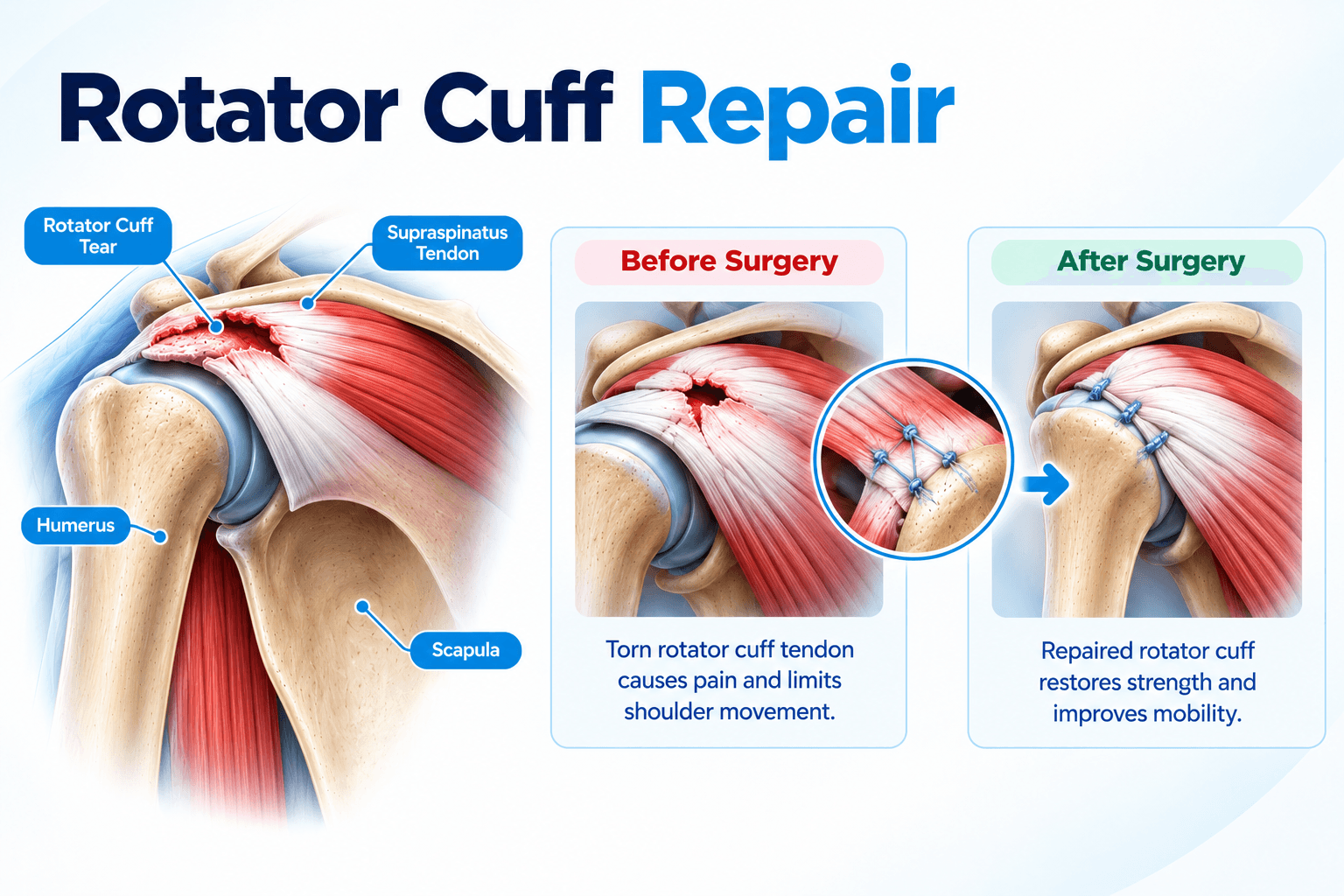
Rotator cuff repair is a procedure that reconnects a torn rotator cuff tendon to the humerus, the bone in the upper arm. The rotator cuff is a group of muscles and tendons that stabilise the shoulder joint and help you lift and rotate your arm.
Whether repair is appropriate depends on factors such as the tear’s location and size, its cause, your activity level, pain, and other symptoms. An orthopaedic surgeon may use a camera and small incisions for arthroscopic repair or choose another surgical approach after clinical assessment and imaging.
Typical Reasons for Rotator Cuff Tears
Rotator cuff damage can happen suddenly or develop gradually. Common contributing causes include:
- Sports injuries: Repeated overhead movements, swimming, and throwing activities can place stress on shoulder tendons.
- Accidents: A fall on an outstretched arm or a direct blow to the shoulder can injure the rotator cuff.
- Repeated movements: Frequent lifting with the arms raised may put additional stress on the tendons.
- Tendon changes with age: Tendons can weaken over time and become more susceptible to tears.
- Heavy lifting: Sudden strain while lifting a heavy object can cause an acute tendon injury.
Not every rotator cuff tear needs surgery. Some can be managed with non-surgical care, such as physiotherapy and activity modification. A clinician can assess the injury and discuss whether repair or another approach may be suitable.
Signs of Rotator Cuff Damage
Symptoms depend on the location and severity of the tear and may include:
- Shoulder pain when lifting the arm.
- Pain or weakness when raising or rotating the arm.
- Discomfort when lying on the affected shoulder, especially at night.
- Difficulty reaching behind your back.
- Reduced shoulder movement.
- Pain that worsens at night.
Seek medical assessment if pain persists, movement becomes difficult, or sudden severe pain and weakness follow an injury.
Types of Rotator Cuff Repair Surgery
The surgical technique depends on the tendon injury, the surrounding tissue, and your general health.
1. Arthroscopic Rotator Cuff Repair
Using small incisions and a camera, the surgeon repairs the tendon by securing it to the bone with sutures and anchors. This approach may be suitable depending on the tear and clinical findings.
2. Open Rotator Cuff Repair
Open repair uses a larger incision to access the tear directly. It may be considered for particular injuries or when an arthroscopic approach is not suitable.
3. Mini-Open Repair
Mini-open repair combines arthroscopic evaluation with a small incision to repair the tendon. The choice of approach depends on the injury and the surgeon’s assessment.
Your orthopaedic surgeon can discuss the potential benefits, limitations, and risks of each approach before recommending a treatment.
How Is Rotator Cuff Repair Surgery Performed?
Care typically involves assessment and diagnosis, treatment planning, the procedure when indicated, postoperative care, and rehabilitation.
Step 1: Medical Consultation and Diagnosis
The doctor reviews your symptoms, medical history, and shoulder movement. Imaging, such as an MRI or ultrasound, may be recommended to assess the tear.
Step 2: Treatment Planning
The treatment plan considers the tear, how long symptoms have been present, your activities, and your response to earlier treatment. Some patients may be offered physiotherapy or other non-surgical care; surgery may be considered for others.
Step 3: Surgery
Anaesthesia is selected based on the procedure and your health. The surgeon examines the shoulder, prepares the damaged tendon, and reattaches it to the bone using the chosen technique.
Step 4: Postoperative Care
Your care team provides instructions about pain control, wound care, and sling use. A sling may be recommended for a period determined by your surgeon to protect the repair while it heals.
Step 5: Rehabilitation
Physiotherapy supports the recovery of shoulder movement and strength. Rehabilitation usually progresses in stages, with timing based on the repair and how your shoulder is healing.
Rotator Cuff Repair Surgery Cost in India
The cost depends on the hospital and city, the surgical technique, the extent of the tendon tear, and the services included. A specialist can provide an estimate after diagnosis.
The total cost may include:
- Orthopaedic consultation and diagnostic tests.
- MRI or other imaging investigations.
- Surgeon and anaesthesia fees.
- Operating theatre and hospital charges.
- Surgical implants, anchors, and other materials.
- Medicines and postoperative care.
- Physiotherapy and rehabilitation.
Complex injuries or more extensive surgery and hospital stays can affect the cost. Insurance coverage and eligibility vary by policy and provider. Request an itemised estimate and confirm whether follow-up visits and physiotherapy are included.
Factors That Can Influence the Cost
Severity of the Tear
A small tear may involve different treatment needs and costs than a large or complex tear.
Surgical Technique
Arthroscopic, mini-open, and open procedures may differ in equipment, implants, and operating time. The recommended technique should be based on clinical suitability.
Hospital and Location
Hospital type, room selection, surgeon fees, and local medical costs can affect the total.
Rehabilitation Requirements
Physiotherapy and follow-up consultations may contribute to the overall cost of care.
When comparing rotator cuff repair surgery costs, consider the full course of treatment, your surgeon’s recommendation, and the rehabilitation involved.
Post-Operative Recovery from Rotator Cuff Repair Surgery
Recovery takes time because the repaired tendon needs to heal and regain strength. Follow your surgeon’s individual instructions for sling use, activity, wound care, and follow-up. Physiotherapy is commonly progressed in stages according to the repair and your healing.
Explore Rotator Cuff Repair Care with VR Healthy
VR Healthy helps patients explore orthopaedic treatment information and connect with medical professionals across India. Consult an orthopaedic specialist to understand the options, recovery expectations, and costs that apply to your individual condition.