
Joint Reduction
A trained doctor carefully guides the displaced bone back into the joint. This may be done with pain relief or anaesthesia. Never attempt to reposition the shoulder yourself.
A shoulder dislocation happens when the upper arm bone moves out of the shoulder socket. Sports injuries, road accidents, falls, and direct impacts can cause severe pain, swelling, a visible change in the joint, and difficulty moving the arm.
Prompt assessment helps identify the injury and guide treatment. VR Healthy helps patients explore shoulder care options and connect with orthopedic specialists.
NABH-accredited hospitals
Highly Expert Surgeons
Happy Patients
Cities
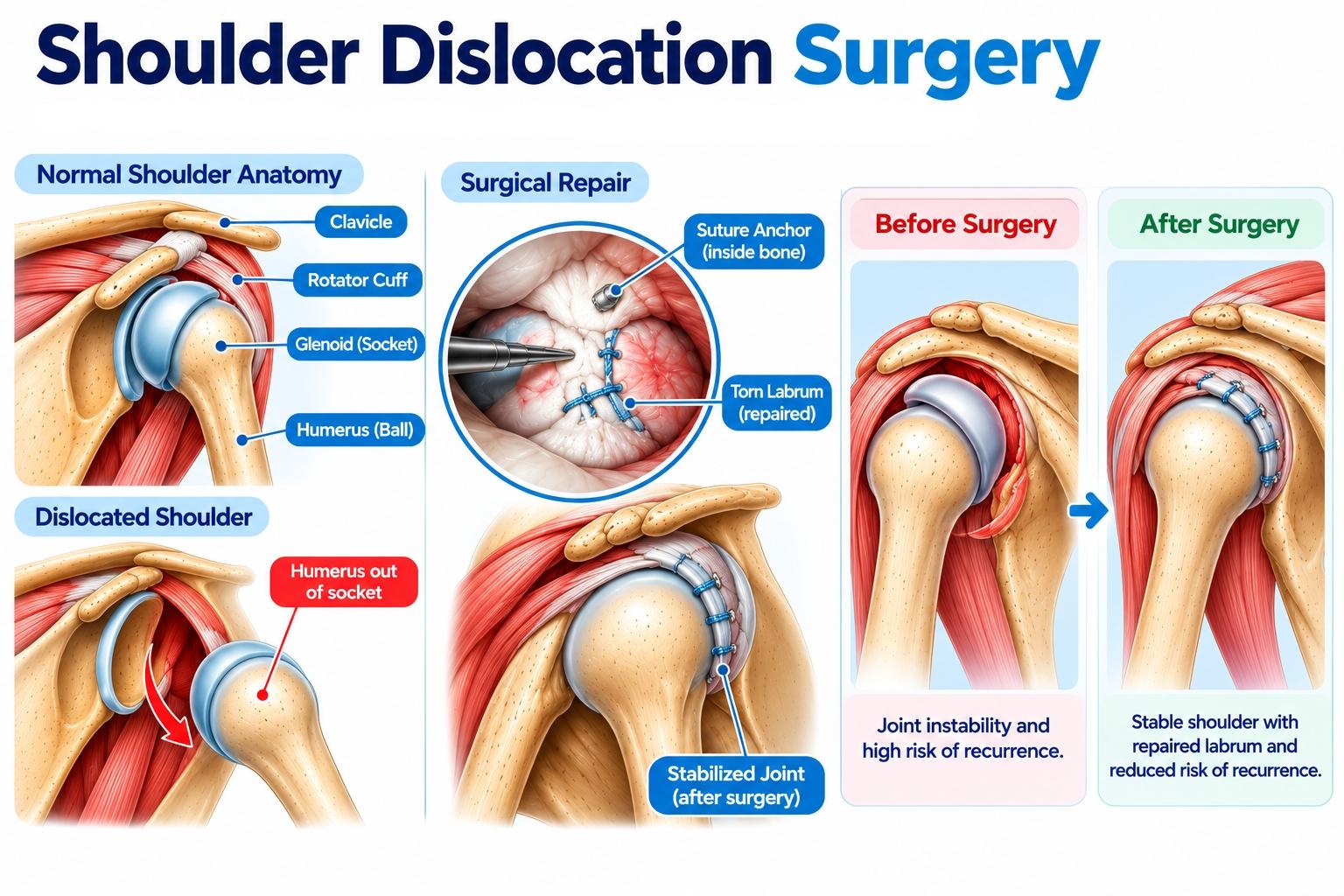
A shoulder dislocation occurs when the upper arm bone moves out of its normal position in the shoulder socket. The shoulder’s wide range of movement supports lifting and reaching, but can also make the joint vulnerable to sudden impacts, falls, and forceful arm movements.
Symptoms may include:
Prompt medical assessment is important to diagnose the injury and determine appropriate care. Do not try to put a dislocated shoulder back into place yourself.
A shoulder can dislocate after an impact or fall, or when force places stress on the joint. Previous dislocations may stretch or damage supporting tissues and make the joint more prone to instability.
Knowing how the injury happened helps an orthopedic specialist assess the shoulder and discuss a suitable treatment plan.
Treatment depends on the extent of the injury, damage to ligaments or other structures, and whether the shoulder has dislocated before.
A trained doctor carefully guides the displaced bone back into the joint. This may be done with pain relief or anaesthesia. Never attempt to reposition the shoulder yourself.
A sling may support the shoulder for a period after reduction, allowing injured tissues to rest. The duration depends on factors such as age and the extent of the injury, as advised by the treating clinician.
A physiotherapist may guide gradual exercises to restore movement, muscle strength, and joint stability as recovery progresses.
Surgery may be considered for recurrent dislocations, significant ligament injury, bone loss, or persistent instability. Depending on the injury and imaging findings, a procedure may repair tissue or stabilize the joint.
Surgery is not required for every shoulder dislocation. Many first-time injuries are managed with reduction, short-term sling support, and rehabilitation, depending on the injury and recovery needs.
A specialist may discuss surgery if the shoulder dislocates repeatedly, supporting ligaments are significantly damaged, or bone injury contributes to ongoing instability. Younger athletes in activities with a higher risk of dislocation may benefit from an individualized risk assessment. Discuss potential benefits, risks, and recovery expectations with an orthopedic specialist.
Costs vary with the procedure, hospital, surgeon and anaesthesia fees, and the patient’s overall health. An estimate may include:
Request an itemized estimate from the hospital. Total expenses may depend on injury severity, length of admission, and rehabilitation needs. Insurance coverage varies by policy, approved benefits, exclusions, and insurer terms; confirm coverage with the hospital and insurer.
Recovery time varies with injury severity and treatment. After a straightforward dislocation, daily activities may be resumed gradually as pain improves and movement returns. Recovery after surgery may take several weeks or months.
Follow your doctor’s advice, avoid heavy exertion until cleared, attend follow-up appointments, and complete prescribed physiotherapy. Returning to sports or heavy lifting too early may increase the risk of another injury.
VR Healthy helps patients explore orthopedic treatment information and connect with healthcare providers to discuss care options. Ask a qualified orthopedic specialist about the injury, recovery goals, and whether reduction, rehabilitation, or surgical stabilization may be appropriate.
Before choosing a provider, discuss the proposed treatment, recovery plan, and possible risks. Patients may also seek a second opinion from a qualified orthopedic specialist.