
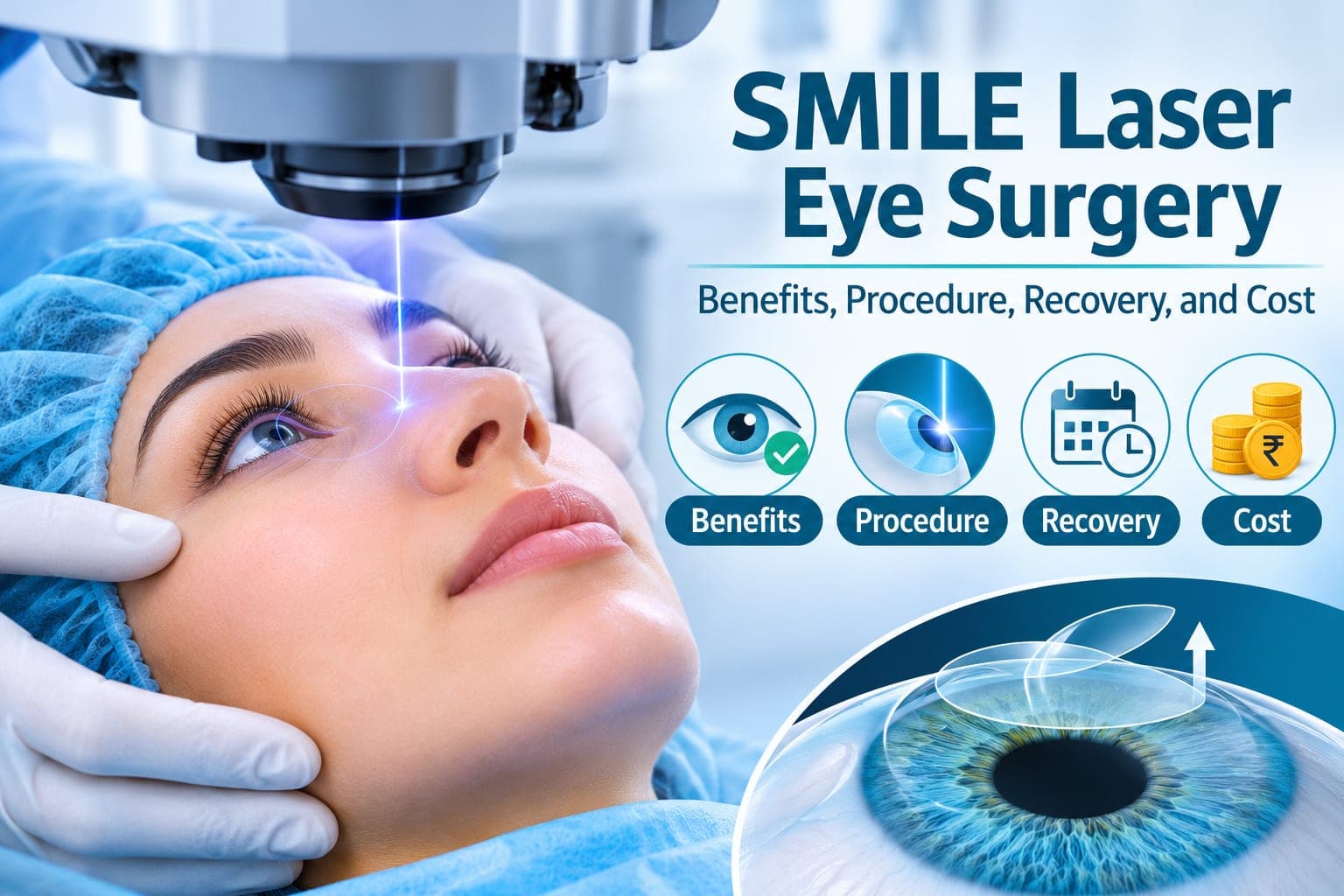
Having good vision is vital in daily life, but putting on glasses or contact lenses may be a pain. Fortunately, there are multiple laser vision correction procedures available to candidates who are interested in declining to use glasses and contact lenses. One of these options is SMILE, an innovative, minimally invasive laser correction procedure.
Get an idea of how SMILE LASIK eye surgery works, who is a likely candidate, and recovery time. No matter how much you know about each specific type of treatment, it is only an eye specialist who can determine which procedure will work best for your situation after fully evaluating your eye condition, medications, and visual needs.
About SMILE laser eye surgery
SMILE means Small Incision Lenticule Extraction. This laser vision correction treats nearsightedness with or without astigmatism. The procedure involves using a femtosecond laser to make a thin disc or piece of tissue and then removing that disc – called a lenticule – through a tiny incision in the eye. This reshapes the cornea to change how light enters the eye.
SMILE does not involve making a large flap in the cornea, as is done with traditional LASIK. This difference might make SMILE the right choice for some individuals with myopia, with or without astigmatism, depending on the device used and the patient's prescription.
Both types of surgery can have the same goal, to improve your vision, but they use different types of surgery. Your eye care professional can tell you which one is right for you.
How Does the Procedure Work?
Usually the procedure goes something like this:
1. Comprehensive Eye Examination
Prior to the procedure, the ophthalmologist assesses your eyes by looking at your prescription, corneal thickness and shape, as well as the tear film and general eye health, to see if you are a good candidate.
2. Preparation for Surgery
Typically, numbing eye drops are used to lessen the pain. You will be awake for the procedure, and the surgical team will give you instructions to stay comfortable.
3. Laser Treatment
Surgically, a femtosecond laser cuts a small round piece of tissue, called a lenticule, in the depth of the cornea. The surgeon then scoops it out through a tiny incision to reshape the cornea and correct the refractive error.
4. Initial Recovery
Your vision may be hazy for the first few hours after the operation but typically gets better over the next few days. Your surgeon will guide you on the use of eye drops and how to look after your eyes during this time.
Advantages of SMILE Laser Eye Surgery
Some of the advantages of SMILE laser eye surgery for the right patients include:
- The operation involves a small incision, rather than a large flap being cut into the cornea.
- Many suitable candidates experience improved vision and become less dependent on glasses or contact lenses.
- Some clients may have lower levels of dry eye signs and symptoms after LASIK than they would certainly have, or else they may still experience dry eye, and they might still require to treat it.
- The time for the laser work itself is normally very brief.
- A majority of patients are able to resume their daily activities quite quickly, once given the go-ahead by their doctor.
Results are different for each person. No laser treatment can guarantee clear vision all the time, and glasses may still be needed in some instances.
Who Is Suitable?
The following should give you some idea as to whether you might qualify for SMILE. Suitable candidates include those with:
- A stable glasses/contacts prescription.
- Corneal thickness and corneal shape being within normal limits.
- Eyes that are healthy and do not have conditions that pose a risk for surgical complications.
- A prescription that falls within the treatment range of the laser technology.
- Realistic expectations about the possible outcomes.
Unstable prescriptions, some corneal conditions, severe dry eye or another eye condition may make the patient a poor fit. A consultation is needed to determine suitability.
SMILE versus Regular LASIK
Both procedures reshape the cornea using a laser, but they do it differently.
| Feature | SMILE | Traditional LASIK |
|---|---|---|
| Surgical technique | Small incision | Creation of a corneal flap |
| Laser technology | Femtosecond laser | Usually femtosecond or mechanical flap creation and an excimer laser |
| Popular Uses | Mostly myopia, with or without eligible astigmatism | Myopia, hyperopia, and astigmatism, depending on eligibility |
| Dry-eye consequences | Could be less impactful for selected sufferers | Dry-eye signs and symptoms |
| Recovery | Rapid | Rapid |
There isn't a superior procedure for everybody. A doctor will select the best procedure for you based on your prescription and corneal readings, lifestyle, and the doctor's judgement.
Recovery & Aftercare
Recovery after Smile LASIK eye surgery will differ from individual to individual. Some patients achieve excellent visual acuity within the first couple of days, while others can take many weeks for vision to improve to its best.
To aid in healing:
Use prescribed eye drops as directed.
Do not rub or pressure your eyes.
Follow the directions for swimming, makeup, and exercise.
Attend all scheduled follow-up appointments.
Shield your eyes from dust and other irritants when you can.
Reach out to your eye doctor right away if you experience sudden vision loss, worsening redness and pain, or other alarming symptoms.
What Is the Cost of SMILE Laser Eye Surgery?
The price is determined by the hospital or eye clinic, the operating surgeon, by the diagnostic tests needed, the laser used for surgery, and the follow-up care. The price can also vary by the city or the surgeon you choose.
Before deciding on SMILE laser eye surgery, get a written estimate of the total costs that includes the consultation, tests, procedure, medications, and follow-up visits. It is better to compare what is included and the quality of care rather than go for the lowest price at a particular practice.
Conclusion
SMILE laser eye surgery is an innovative procedure that may allow you to decrease your reliance on glasses and contacts. This procedure is a variation of LASIK, and it involves the removal of a tiny amount of corneal tissue using a tiny incision instead of the creation of a corneal flap.
You should receive your own free consultation with an eye specialist who can advise you on what type of SMILE laser eye surgery is best suited for your eye needs and vision requirements.